Sunday, May 3, 2009

Items for Light and Heat in a Disaster Supply Kit

Provident Principles and Practices
© David Edwards, 2009

.
PRINCIPLES: “Fuel and light: Flashlight. Matches.” – A few items listed in Emergency Storage, Essentials of Home Production & Storage, The Church of Jesus Christ of Latter-day Saints, 1978, p. 11.

“Flashlights and extra batteries. Matches in a waterproof container.” – A few items listed in American Red Cross site at www2.redcross.org/services/disaster/0,1082,0_3_,00.html

“Use the flashlight to find your way if the power is out. Do not use candles or any other open flame for emergency lighting.” – ARC, www2.redcross.org/static/file_cont119_lang0_62.doc

PRACTICES: After you get out of debt and store food, you might consider other preparations.

Light. After an emergency, electricity may fail. It may be dark inside or outside. Reliable sources of light stored in your disaster supply kit can make a difference. A small flashlight is essential. Store plenty of alkaline or lithium batteries for it, outside your flashlight. They store better and last longer in service than “heavy duty” batteries do. You can wrap batteries in plastic wrap to prevent corrosion or shorting. Windup LED flashlights, which in theory can work indefinitely, can also be stored. However, some types fail after having been in use for a while. Test some first through a series of lengthy charge and discharge cycles. If you find one that works, you can store it as a backup source of light. Lightsticks, which come in different sizes and colors, may also be useful. Some last for up to 12 hours. They do not produce a spark or flame, so they are much safer for use in an emergency in which explosive or flammable gases, such as natural gas or methane, may be present in the air. This may be the case, for example, after an earthquake. Micro LED lights take up little space. Micro LED headlamps allow for hands-free use, important in many emergencies in which the lights are out and working with one’s hands is necessary. Candles are not currently recommended for storage in a disaster supply kit.

Ignition. Several types of fire starters can be stored in your disaster supply kit. Fires can help you stay warm, and fires may allow you boil water, cook food, dry out your clothes or signal others. Boiling water is generally an excellent way to disinfect water of uncertain biological content. Wind-proof, water-proof camping matches can help start fires. A butane lighter or two, kept in a leakproof container, may also be helpful. A one-handed rotating flint fire starter, plus tinder, can assist you in starting fires in the field. A magnesium/flint/striker fire starter kit tends to be a dependable means of starting fires even when it is raining, or when wood is damp, since magnesium burns with an intensely hot flame. A magnifying glass can be used to focus sunlight on a tiny point on tinder and start a fire. Be careful not to start fires if flammable or explosive gases or vapors may be present.

Heat. Heat can be provided by a number of means other than an open fire. One option is a small butane camping stove. If you store one, store butane fuel for it as well. Hand-warmer packets can help warm hands when needed for extra manual dexterity on cold days. They can warm feet, too.
.
Graphics Credits:
.
.
.
.
Other graphics by D. or S. Edwards.

Sunday, April 12, 2009

Recent Counsel on Provident Living and Faith

Provident Principles and Practices
© David Edwards, 2009
a
a
PRINCIPLES: “To provide providently, we must practice the principles of provident living: joyfully living within our means, being content with what we have, avoiding excessive debt, and diligently saving and preparing for rainy-day emergencies. When we live providently, we can provide for ourselves and our families and also follow the Savior’s example to serve and bless others.” – Robert D. Hales

“The obedient soul should not be surprised if disappointments or even disasters interrupt his peace. . . . In times of distress, let your covenants be paramount and let your obedience be exact. Then you can ask in faith, nothing wavering, according to your need, and God will answer.” – D. Todd Christofferson

“The scripture goes on to praise those of us who prepared for adversity in the more prosperous times. Many of you had the faith to try to qualify for the help you now need, before the crisis came.” – Henry B. Eyring

“A life of fun and games and expensive toys has come to an abrupt end. We move from a generation of ease and entertainment to a generation of hard work and responsibility. We do not know how long that will last. . . . Some of you live in countries where most of what you eat and some of what you wear will depend on what can be produced by the family.” – Boyd K. Packer

“It usually just takes a few phone calls from presiding authorities to local leaders to mobilize hundreds and sometimes thousands of individuals to go to the rescue of their fellow brothers and sisters in distress. . . . we now call upon you to mobilize our priesthood quorums in response to the employment and financial challenges facing our members. Consider this your personal phone call. Now is the time to rally around, lift up, and help the families in our quorums who may be in distress . . . . Many wards and stakes have called employment specialists to provide bishops and quorum leaders with additional support. Do not hesitate to call upon them for help. . . . In many areas of the Church, we have established employment resource centers. The staff in these centers have been trained to assist you with your quorum, ward, and stake employment needs. Their close relationships with employers will be an asset with career development and employment. . . . The responsibility for finding employment or improving your employment rests with you. Continued guidance comes from the Lord through regular fasting and prayer. Your quorum leaders, bishops, specialists, and employment resource center staff will help in your efforts.” – Richard C. Edgely

“Although our journey through mortality will at times place us in harm’s way, may I offer you tonight three suggestions which, when observed and followed, will lead us to safety. They are: 1. Study diligently. 2. Pray fervently. 3. Live righteously. . . . If we incorporate them into our lives . . . we will have the strength to withstand the adversary. Should we ignore them, we will be opening the door for Satan to have influence and power over us.” – Thomas S. Monson

Graphics:
.
Photo of Elder Henry B. Eyring: www.whitehouse.gov/news/releases/2008/05/images/20080529-2_utah-515h.jpg (modified in Paint to focus on Elder Eyring)

Digital representation of painting of President Thomas S. Monson downloaded with permission from www.dochristensen.com/TSM-Download.html

Sunday, April 5, 2009

Vegetable Gardening

Provident Principles and Practices
© David Edwards, 2009
.
.
.

PRINCIPLES: Spencer W. Kimball encouraged us as Church members during the April Conference in 1976 to plant and grow vegetables in our own yards. He indicated that even those living in condominiums can usually plant and grow some vegetables in small containers. He counseled us to apply ourselves and learn best practices for growing our own food.


Marion G. Romney in April Conference in 1975 echoed prophetic counsel from the past when he affirmed that the time will come when it will be our own produced goods that will keep us alive.

.

PRACTICES: As President Kimball said, you can grow vegetables in above-ground containers, such as pots or planters. The reference at the close of this posting gives additional information.

On a somewhat larger scale, it is possible to grow vegetables above ground in lasagna gardens, kiddie-pool gardens, or raised-bed gardens. Each of these generally share the characteristic of using “soil” mix created from compost, mulch, aged manure, peat moss, grass clippings, or other organic-rich natural materials as well as native soil materials, all added to a well-drained container. 8-10” of the mix is usually sufficient for vegetables. Cardboard is often put down first to prevent weeds from growing up into the garden. If the soil mix is weed-free, then so may your garden be for a while.

You can learn about lasagna gardens, which use organic materials laid down in layers, at http://www.motherearthnews.com/Organic-Gardening/1999-04-01/Lasagna-Gardening.aspx. See descriptions of kiddie-pool gardens at http://idigmygarden.com/forums/showthread.php?t=6298 and http://www.ehow.com/how_4562661_grow-pumpkins-kiddie-pool.html.Read about raised-bed gardens at http://aggie-horticulture.tamu.edu/extension/raisedbed/index.html and http://extension.missouri.edu/explore/agguides/hort/g06985.htm.

A method that many people enjoy is the Mittleider method. It is said to provide large yields of food per unit area, minimize the amount of work involved in gardening, permit the use of only simple tools, decrease the amount of water used, produce healthier plants, and allow for growth of nearly any vegetable in nearly any climate. Books are available to assist in learning this method. (See http://foodforeveryone.org/vegetable_gardening/22/how-is-this-method-different)

Experts say that your garden generally needs six to eight hours of sunlight per day. In hot climates, it may be necessary to put shade cloth some distance above plants to block part of the midday heat.

You may need to alter soil pH. It generally should be in the 6.0-7.0 range. If pH is too high, as is typical in the arid southwest, then you can mix in pure, elemental sulfur to moist, well-aerated soil to increase soil acidity after a few weeks (http://hubcap.clemson.edu/~blpprt/lowerpH.html#table2).

To understand more about soil preparation, bed development, planting, watering, fertilizing, weed control, and harvesting, you can read books and articles and talk with successful local gardeners.

More at www.hgic.umd.edu/_media/documents/HG600Containerveggardening.pdf

Graphics credits:

Harvested carrots: www.cdc.gov/Features/GrowingVegetables/

Tomatoes: www.ars.usda.gov/is/graphics/photos/oct07/k9208-1i.jpg

Grow a garden poster: www.nal.usda.gov/fnic/history/can.htm

Other graphics: D. or S. Edwards

Look to the First Presidency

Provident Principles and Practices
© David Edwards, 2009


PRINCIPLES: “Look to the Presidency and receive instruction. Every man who is afraid, covetous, will be taken in a snare. The time is soon coming when no man will have any peace but in Zion and her stakes.” – Joseph Smith, History of the Church of Jesus Christ of Latter-day Saints, vol. 3, 1905, edited by B.H. Roberts, and published by the Church, p. 391.

Harold B. Lee, speaking in General Conference in April 1943, averred that we as Church members will have security only to the extent that we obey God's commandments, live in such a way that we are entitled to a close and comforting association with the Holy Ghost, give heed to the instruction of the Lord's servants, and follow the instructions given to the Church.


Nearly three decades later, Harold B. Lee said further that there will be only one way to have safety, and that will be to follow explicitly the counsels and commandments of the President of this Church, ‘as he receiveth them, walking in all holiness before me . . . as if from mine own mouth, in all patience and faith.’” (D&C 21: 4-5) – Harold B. Lee, General Conference, October 1970

.

In General Conference, October 1973, Ezra Taft Benson reminded us of the Savior's prophecy in Matthew, chapter 24, wherein we are promised “famines, and pestilences, and earthquakes . . . ” (Matt. 24:7). Yet, despite these calamities, the Lord has said: “. . . if ye are prepared ye shall not fear” (D&C 38:30). President Benson gave us the key for becoming ready for these calamities, referring to Doctrine and Covenants, Section 1, when he said that this key was to listen to and pay attention to the word of the Lord through his the prophets, which will guide us as to how we may best prepare.


Bruce R. McConkie told us in General Conference in April 1980 what we must do for all things, from the perspective of eternity, to combine to effect good in our lives. What is required on our part for this to happen? We must take a stand backing the Church on every point, whether spiritual or political, listen to and obey the Holy Gost, and follow the counsel of the prophets and apostles.

.

Speaking in General Conference in October 2005, Keith B. McMullin instructed us that we will be blessed as we heed the counsel of the prophets, keeping our expenses under our incomes, staying away from debts not necessary for us to contract, and storing enough of the necessities of life to support our families for a year or more. As we do so, living these principles fully to the extent of our ability, that which we have stored will be blessed to provide abundantly for our needs.


PRACTICES: Perilous times are upon us. The only safety is in following the Lord Jesus Christ and His servants. Look to the First Presidency and receive instruction. Listen to these men whom God has called to preside. They will show us how to prepare for calamities now and in the future. Obey their counsel. Live within your means, avoid debt, and store necessities of life to sustain yourselves and your families for at least a year. As you do this, all things will work together for your good.

Graphics:

Joseph Smith: www.loc.gov/loc/lcib/0506-8/images/smith.jpg

Ezra Taft Benson: www.usda.gov/img/content/benson.gif

First Aid Kits and Medical Supplies

Provident Principles and Practices
© David Edwards, 2009


PRINCIPLES: Ezra Taft Benson, in General Conference, April 1967, taught that not only should a man be ready to physically protect himself, but that he should also store enough supplies to take care of his family in a crisis.

Ezra Taft Benson also said that, in regard to our storage programs, it would be well for us to store at least a year's supply of family medical supplies (General Conference, October 1973).

The booklet called Essentials of Home production and Storage, published by The Church of Jesus Christ of Latter-day Saints in 1978, encourages all members to include first aid supplies as part of our storage program. Storage containers can be made of metal, wood, straw or plastic. They should have various storage compartments and should be closed with tightly fitting covers. Family physicians can suggest specific supplies that might be needed for a family in a crisis. Supplies in first aid kits need to be periodically checked. Some supplies need to be regularly rotated, with expired or degraded supplies being discarded. Supplies need to be labeled and easily accessible for quick use.

President Gordon B. Hinckley counseled us in General Conference, October 2005, to set aside not only food and water, but also medicine.

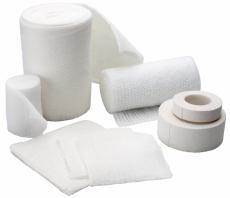
PRACTICES: The following items are among those suggested for storage in a first aid kit in the EHP&S (1978) booklet and/or at the American Red Cross (ARC) Web site (2009) . You may also wish to include a flashlight and batteries for nighttime work. Be sure to include medications prescribed by a physician and any other type of health or medical aids or remedies on which you depend.

Absorbent compress dressings (2, 5 x 9 inches)
Adhesive bandages (25, assorted sizes)
Adhesive cloth tape (10 yards x 1 inch)
Antibiotic ointment packets (5, ~1 gram each)
Antiseptic wipe packets (5)
Aspirin (2 packets, 81 mg each)
Breathing barrier (with one-way valve)
Consecrated oil
Elastic bandages
First aid instruction booklet
Hydrocortisone ointment packets (2, ~1 gm each)
Instant cold compress
Knife
Matches
Measuring cup
Medications prescribed by physician
Medicine dropper
Needles
Non-latex gloves (2 pair, size large)
Oral thermometer, non-glass, non-mercury
Roller bandage (3 inches wide)
Roller bandage (4 inches wide)
Safety pins
Scissors
Soap
Space blanket
Sterile gauze pads (5, 3 x 3 inches)
Sterile gauze pads (5, 4 x 4 inches)
Triangular bandages (2)
Tweezers

The ARC (2009) list is found at http://www.redcross.org/services/hss/lifeline/fakit.html

.

Graphics credits:

Gauze supplies:
www.nlm.nih.gov/medlineplus/images/gauze.jpg
First aid kit:
www.osha.gov/SLTC/etools/evacuation/images/first_aid_kit.jpg
Medicines:
www.cdc.gov/Partners/Archive/MedicationRecord/MedicationRecord_355px.jpg

Sunday, March 29, 2009

Counsel on Gardens and Gardening

Provident Principles and Practices
© David Edwards, 2009
.
.

PRINCIPLES: In General Conference in April 1937, J. Reuben Clark, Jr., counseled those who had space for gardening to grow a garden and those who had land for farming to farm that land.


.Spencer W. Kimball, in the April 1974 General Conference, highlighted the importance of knowing how to produce food at home when he declared that there will come a point when stores will not be available.

.

Later, in October Conference that year, he said that growing our own food helps us become more self-reliant. In difficult times, people may regret not having gardened, planted fruit trees and berries, and canned their own food.

.

A few years later, Vaughn J. Featherstone, speaking in April General Conference in 1976, encouraged Church members to provide as much of their own food resources as possible. He counseled us to purchase, in the event of a food shortage, a supply of garden seeds sufficient for a spring planting.

.

Spencer W. Kimball, in the same conference, echoed the counsel to to provide as much of our own food resources as possible. These resources, he said, might include vegetables, fruit trees, berries, grapes -- so long as the climate permits their growth. Even people living in apartments may be able to grow some food in planters or pots...


Later, in April General Conference of 1981, Spencer W. Kimball reiterated his counsel, asking those of us with land, even just small plots, to grow gardens.


Ezra Taft Benson stated in General Conference in October 1987 that it may be just as critical for our safety and wellbeing today to produce and store food as it was in Noah's day for people to board the ark.


.PRACTICES: Learn how to garden. Talk to neighbors. Read. Attend classes. Grow your own food in gardens and on bushes and vines if the climate is right. Produce as much as you can. These practices will help you should bad times come, times when food is not available from stores. Producing and storing your own food may some day soon be as critical to your temporal survival as getting aboard the ark was to people in Noah's day.


Graphics credits:


Farm crop:
www.ers.usda.gov/Data/CostsAndReturns/Images/Soybean94c3946.jpg


Closed store: Word clip art (modified)

Fruit:
www.ars.usda.gov/is/graphics/photos/k4957-19i.jpg

Seeds:www.nal.usda.gov/images/infofarm/seeds.jpg

Grapes:www.ars.usda.gov/is/graphics/photos/oct07/k5338-7.htm

Garden: D. or S. Edwards

Noah's ark: Word clip art

Thursday, March 19, 2009

Hats, Caps and Other Headwear

Provident Principles and Practices
© David Edwards, 2009

PRINCIPLES: Hats, caps and other headgear may be part of a year’s supply of clothing that we have been asked to acquire (see, for example, J. Reuben Clark, General Conference, April 1937; John. H. Vandenberg, General Conference, October 1966). We also need to consider hats or caps for our disaster supply kits. Warm hats or caps may be needed for winter cold; and hats or other headgear that shade our heads and necks may be needed to protect us from summer sun and heat. Appropriate headgear may be needed during depressions, earthquakes, floods, tornadoes and wars, events mentioned as examples to think of when we anticipate possible future needs and make our plans to safeguard our families (First Presidency Message, 6 October 1973).


PRACTICES: Consider storing hats, caps, and other headgear for each family member. We may need hats, caps and other headgear to help us safely weather the elements when we walk, bike, camp or work outdoors. We may need appropriate headgear in disasters to help us evacuate to safer locations; rescue or aid family, friends or others, possibly in distant places; or help with community recovery efforts. These are not times when we want to be badly sunburned on the head or neck or be unduly exposed to cold weather possibly leading to life-threatening hypothermia or frostbite.

Warm Hats and Caps. Families may wish to store warm hats or caps for winter. Much body heat can be lost through uncapped heads in cold weather. Warm hats or caps may be made of wool, fleece or fur. It is desirable for a winter hat or cap to cover one’s ears and keep most of one’s head warm. A pullover wool or fleece stocking cap, balaclava, or ski mask can do it. One or two of these items can be easily kept in a disaster supply kit. Cotton ball caps are generally not sufficiently warm. We may wish to wear warm caps when sleeping outdoors in sleeping bags in cold weather.

UV Protection and Cooling. Hats are important for protecting against UV rays and heat from the sun. Broad-rimmed hats work well. Ball caps offer short brims in front to help shade the upper face, but these caps generally do not offer much protection to the ears, lower face, or the neck, either front or back. A bandana or piece of cloth held in place by a ball cap or other hat and draping down the back of the neck (and possibly also across the ears) may help provide some extra protection against UV rays. If made wet, the bandana or piece of cloth can additionally help cool the head, neck and body via evaporation, provided that ambient humidity is sufficiently low. Evaporative cooling can assist in preventing heat exhaustion and heat stroke, a potential killer in the summer.

Other Headgear and Neckwear. Keep an extra pair of glasses in your disaster supply kit. Consider sunglasses to protect against glare. A wool scarf can provide for extra warmth around your neck in extreme cold. N-95 masks may screen out dust or help protect against pandemic influenza virus in droplets from coughs or sneezes. Ear plugs or other hearing protection may be needed in noisy environments. If you must be outside for any length of time in an area with mosquitoes, you may want to have mosquito netting that fits over your hat and covers your face, other parts of your head and neck. Lanyards around the neck can carry compasses, whistles or other useful emergency items.

Photo Credits:

Man in cowboy hat: "Cowboy Howard Moss of Dixon, Montana, July 1999." Photo by Marta Brooks, for "History of Farming and Ranching: A Study of the Local Culture by St. Ignatius High School," a Montana Local Legacies project, retrieved 19 March 2009 from http://www.americaslibrary.gov/assets/es/mt/es_mt_farming_1_e.jpg

Hat: D. or S. Edwards

Fur cap on Russian woman: http://www.loc.gov/exhibits/russian/cathe.jpg

Sun: www.crh.noaa.gov/sgf/Safety/images/sunshine.jpg

Glasses and case: http://www.nlm.nih.govslashmedlineplusslashimagesslashglasses.jpg/

Scarf and wool cap: http://www.nia.nih.gov/NR/rdonlyres/B9C7F82C-6D1B-42D5-A0A8-7D64D6DE73B9/5444/pic10.jpg
Respirator: http://www.cdc.govslashfeaturesslashmasksrespiratorsslashrespirator.jpg/
Earplug: http://www.lbl.govslashtodayslashimagesslashlabslashearplugs.jpg/
Mosquito net covering: http://www.fws.gov/northeast/lakeumbagog/website.images/current_surveys/mike.cropped.jpg

Sunday, March 1, 2009

Shoes, Boots, Socks and Other Footwear

Provident Principles and Practices
© David Edwards, 2009
.
.
PRINCIPLES: Over the years, the Lord has counseled us to store a year’s supply of clothing (see, for example, J. Reuben Clark, General Conference, April 1937; John. H. Vandenberg, General Conference, October 1966). Clothing includes footwear, such as shoes, boots, and socks. We can store footwear in our homes and our disaster supply kits. Extra sets of footwear, and warmer or sturdier footwear, may be needed in wars, depressions, earthquakes, floods and tornadoes. Such events have been given as examples for us to think of when anticipating possible future needs and preparing to safeguard our families (First Presidency Message, 6 October 1973).

Those of us with limited income may wish to put our money into food and clothing (J. Reuben Clark, Jr., General Conference, April 1937). Consider buying and storing shoes, boots and socks for working outdoors and for staying warm (see Ezra Taft Benson, General Conference, October 1973).

Supplies for creating our own clothing or shoes, such as leather, might be considered for home storage (Ezra Taft Benson, General Conference, October 1973). As President Wilford Woodruff said, a time will come when making our own shoes will be necessary (Discourses, p. 166-67). The value of making or producing items that become part of our year’s supply of clothing is echoed by more recent general authorities as well (see L. Tom Perry, General Conference, October 1980).

PRACTICES: Consider storing not only at home but also in disaster supply kits extra sets of durable, well-fitting socks, shoes and boots for each member of your family. You may need extra footwear to help protect your feet and body against nature, especially if you must travel. You may need to do so during an evacuation or a trip involving the rescue or aid of family members or others.

For summer wear, you may wish to store well-ventilated socks and shoes or boots.

Cold weather, even in Arizona, may present risks during a winter emergency, especially in the mountains. Hypothermia can kill. Frostbite can damage feet and make survival difficult. Having warm footwear is essential. Consider winter boots rated below the coldest temperatures expected. Ratings are good only for those who are active or moving.

.

Wool socks can help provide needed warmth. Merino wool tends to be least scratchy. Avoid cotton, which holds moisture. Silk or synthetic liner socks wick moisture away from feet. Use of liner socks can help prevent blisters.

Moisture is the enemy of warmth and comfort. Avoid getting footwear wet if possible. If footwear does get wet or sweaty, swap it out for socks and shoes or boots that are dry. Dry out wet footwear in the sunlight or in front of a fire – gently. This may take several hours or more. Do not dry shoes or boots too quickly. In cold weather, never wear socks worn that day to bed; instead, wear fresh, dry socks to bed.

Thick moleskin, available in drugstores, can protect feet against blistering or enable one to endure walking on feet with blisters. Cut out a hole in the moleskin slightly larger than the blister, and stick the moleskin on the foot around the blister so that the moleskin and shoe or boot do not rub on it.

More on blister care at http://www.med.umich.edu/1libr/sma/sma_blisters_sma.htm

Photo Credits:

Blister: http://www.catalog.niddk.nih.gov/ImageLibrary/NIDDKimages/Thumbnails/N00362_T.jpg

Other photos: D. and S. Edwards

Historic Counsel: Clothing Creation and Storage

Provident Principles and Practices
© David Edwards, 2009


PRINCIPLES: President Wilford Woodruff said, “The day will come when, as we have been told, we shall all see the necessity of making our own shoes and clothing and raising our own food, and uniting together to carry out the purposes of the Lord. . . .” (Discourses, p. 166-67).
.
President J. Reuben Clark, Jr. asked for every household leader to ensure that the household has food, clothing, and, if possible, fuel storage for at least a year. He further suggested that those without large incomes purchase clothing and food rather than bonds and stocks (General Conference, April 1937). He quipped that, when the time comes that food, clothing and shelter are not readily available and cannot easily be purchased, money may have limited value, because people will not be able to eat money, clothe themselves with it, or burn a sufficient quantity of it to stay warm (Church News, November 21, 1953, p.4).

Bishop John. H. Vandenberg asked that we seek to remove from ourselves any debt and obtain a supply of food, clothing and money in sufficient quantity to deal with an emergency (General Conference, October 1966).

In a message to the Church delivered on 6 October 1973, the First Presidency suggested that we consider both manmade and natural disasters when anticipating and planning for needs of our families. Manmade disasters that they mentioned include wars and depressions. Natural disasters that they mentioned include earthquakes, floods, and tornadoes. They also mentioned famines, which can have both natural and manmade causes. The First Presidency also recommended that those who need to move frequently or who live in smaller homes, who have limited capacity for storage, nevertheless store as much food, clothing and fuel as they can.
.
Elder Ezra Taft Benson in General Conference, 1973, suggested that we plan and prepare to keep ourselves warm during winter months when shortages may exist by storing clothes for work and warmth. He also suggested that we think about accumulating leather and rolls of fabric.

L. Tom Perry encouraged Church members to elevate their priorities in regard to obtaining a one-year supply. He asked us whether we could help accomplish this by producing our own clothes, doing our own gardening, and preserving our own food (General Conference, October 1980).
.
The Church counseled its members in a home production and storage guideline booklet to store enough clothing for the whole family for a year or more. The clothing ought to be able to meet the needs of different seasons. In addition, the Church encouraged members to store fabric, thread, needles and other sewing notions where possible (Essentials of Home Production & Storage, the Church of Jesus Christ of Latter-day Saints, 1978.)

Marion G. Romney said that it is vital for us to follow counsel to have a year’s supply of food and clothing (Ensign, April 1981, p. 6-7).

PRACTICES: Current Church counsel is to get out of debt, put aside a store of money, and obtain a three-month supply of foods that we regularly eat on an everyday basis. Following this, we are to obtain an extended supply of long-term storage foods. Beyond these objectives, the Church counsels us that we may choose to store other items that may be of use to us and our families in times of crisis. This may include clothing.
.
Clothing can be stored both at home and in disaster supply kits. As intimated by some Church leaders historically, clothing may someday become scarce or unavailable in stores. We may thus greatly benefit from creating a long-term supply of work clothes and warm clothes, particularly if weather changes or we need to travel through colder areas. Consider also buying leather and bolts of cloth for storage. In addition, those of us without much knowledge or experience in sewing may wish to learn better how to make and mend clothes.

More: http://providentliving.org/content/display/0,11666,7636-1-4104-1,00.html

Friday, February 13, 2009

Year’s Supply: Too Much, Too Little?

Provident Principles and Practices
© David Edwards, 2009


PRINCIPLES: Current church counsel is to first obtain a reserve of several month’s worth of ordinary foods that we regularly eat, and then, once we have done that, to acquire additional food-storage items such as grains and legumes that can be stored for a long time, which can keep us and our children alive if nothing else is available to eat. The Church also mentions that we may wish to store sugar, nonfat dry milk, salt, baking soda, cooking oil, Vitamin C and other essential nutrients. (See Elder Keith B. McMullin, General Conference, April 2007; and providentliving.org.)
.
PRACTICES:


Current Church guidelines supersede older guidelines for a year’s supply of food for one person of 400 lbs. grain, 60 lbs. legumes, 60 lbs. sugar or honey, 16 lbs. powdered milk, 10 quarts oil, and 8 lbs. salt, as illustrated in the photo at the top. Divided into daily portions, such a supply is only sufficient for one loaf of bread and a third of a cup of beans, as shown in the lower photo. Would you want just this, or more? Are you ready for the events of these, the latter days?

Photos used by permission from “Bakersdozen”; taken from http://www.ldsavow.com/forum/showthread.php?t=113857&page=2 (accessible only by subscription).

Saturday, February 7, 2009

Bedding and Disaster Supply Kits

Provident Principles and Practices
© David Edwards, 2009


PRINCIPLES: “Emergency Storage (Easily accessible and in a portable container)(See p. 7) . . . Bedding . . . Blanket, Cloth Sheet, Plastic Sheet.” – The Church of Jesus Christ of Latter-day Saints, Essentials of Home Production and Storage, 1978, p. 11.

“Bedding – Include . . . Blankets or sleeping bags . . . .” – The American Red Cross, Charter Oak Chapter Web site, 2009

PRACTICES: Few of us wish to be like those of whom it is said: “Out in the desert they wander, hungry and helpless and cold” (Mary Wingate). Stored in or near each disaster supply kit should thus be something comfortable and warm in which to sleep, something that you can take with you in an emergency. This can make life away from home more endurable and safe. Blankets, cloth sheets, plastic sheets, sleeping bags, and ground pads offer comfort, and they can help keep us from going into hypothermia when we sleep out in the cold.

Hypothermia. Exposure to cold air or rain may cause hypothermia. This can happen below 40 F, or even at higher temperatures if one is wet. At early stages, symptoms may include shivering, decreased motor abilities, poor judgment, and apathy. Late-stage hypothermia, resulting from more severe exposure, can result in stiff muscles, decreased heart rate, weakness, confusion, and even unconsciousness or death. Don’t risk it. Proper bedding, along with warm clothing, can help prevent hypothermia.

Blankets. Good quality thick wool blankets are often available through speciality catalogs at higher prices or through military surplus stores at more reasonable prices. Thick wool blankets can provide a great deal of protection from cold. They even provide some insulating value when wet. But some people prefer fleece blankets, with synthetic fiber.

Cotton sheets. Cotton sheets can line blankets or be placed atop open sleeping bags. They are easy to wash. Cotton sheets can be hung up to provide privacy barriers. If necessary, clean cotton sheets can be torn into pieces for bandages. They can also be used to prefilter turbid or dirty water.

Plastic sheets. Plastic sheets can be placed on muddy ground to protect blankets or sleeping bags. If large enough (e.g., 10’ x 12’), a plastic sheet can also be wrapped around a blanket or sleeping bag to provide protection from rain or sleet or snow. Generally, a 4-mil thickness is adequate.

Sleeping bags. Sleeping bags may come in rectangular or mummy configurations. Mummy bags are generally lighter and warmer than rectangular bags of the same length, but the latter allow for greater foot and leg freedom. Choose an appropriate size of sleeping bag for each user. Sleeping bags are rated for warmth. Generally, it is a good idea to get one for your kit that is rated for the coldest winter temperatures that you might expect for your place of refuge. Overbags or bag liners can increase warmth. Synthetic fiber bags generally are warmer than down bags when wet. Synthetic fiber bags can also be washed in commercial washing machines using mild detergent. A ground pad placed under a bag will provide needed comfort and protection from the cold ground.

More:
http://charteroak.redcross.org/media/Your_Family_Disaster_Supplies_Kit.pdf; http://www.bt.cdc.gov/disasters/winter/pdf/cold_guide.pdf;

Photo Credits:

Cold desert: http://www.nps.gov/bibe/planyourvisit/images/pj_snow_2001.jpg

Thursday, February 5, 2009

Water Needs and Disaster Supply Kits

Provident Principles and Practices
© David Edwards, 2009


PRINCIPLES: In Essentials of Home Production and Storage, published in 1978 by the Church of Jesus Christ of Latter-day Saints, it says that individuals and families ought to have on hand easily movable containers with stored emergency supplies, placing the containers in locations where they can be picked up quickly if needed. On p. 7, it states that these containers should contain water. This guide furthermore refers to the wisdom of storing agents that can purify water. The reason given is that in most areas it is not practical to store enough water to supply our needs for a year.

The American Red Cross, Charter Oak Chapter Web site, 2009, suggests that, within our disaster supply kits, we “store one gallon of water per person per day (two quarts for drinking, two quarts for food preparation/sanitation).” This is about half that which we would store in our house, where the weight of water is not so great a consideration.

PRACTICES: We need water for drinking. Water may be vital for washing, bathing, first aid, and oral rehydration. If it’s hot or humid, or we’re active, we may need several gallons per day. Storing water in disaster supply kits is recommended by the Church, FEMA and the American Red Cross.

Quantity. One gallon of water weighs 8.3 pounds. Most of us cannot easily lift a disaster supply kit containing all other needed supplies if it also holds three to five gallons of water. You will probably want to include within your kit, however, at least a quart to a gallon of water ready to drink. To utilize sources of water that you find outside the home, you may choose to include in your kit water purification tablets and/or devices, bottles for solar water purification, and containers for storing and transporting water. You may also wish to keep on hand next to your disaster supply kit a larger, readily accessible supply of water that you can quickly pick up and put into your car and take with you. For example, this could consist of one or more flats of commercial bottled water, or a three or five-gallon container filled with treated water (e.g., using 8 drops 5.25% pure bleach/gallon water).

Filled Water Containers. You can include in your kit some water in plastic bottles or a canteen. Commercially filled plastic water bottles will work. If you prefer to employ used juice bottles, they should first be washed out with soap and water and rinsed thoroughly. Cap bottles tightly so that they do not leak. You can put three 0.5-L bottles in a zipped gallon-size freezer bag to help prevent damage to kit contents should a bottle leak. Clear plastic 0.5 or 1.0 L PET bottles can be used for solar disinfection of water found outside the home. Exposure to sunlight through a clear PET bottle (six hours in sunlight on clear days; two days, if cloudy) can destroy most pathogenic microbes. Be sure to remove all labels from the bottles, and place the bottles on their sides in the sunlight, away from any shadows.

Empty Containers. You can include empty containers to fill with water in case you find a source of water outside the home. Containers may include buckets, platypus water carriers, or zipped freezer bags. While adding little weight or volume to kit contents, empty containers increase your options.

Water Purification Tablets. EPA-registered water purification tablets are effective against viruses, bacteria, Giardia and Cryptosporidium. It may take several hours for tablets to purify water.

Portable Water Purification Devices. These important devices, which can purify water, include those that employ ceramic cartridges to filter microbes out of water, those that use electrolysis to generate reactive oxides to destroy pathogens, and those that use UV light for water disinfection.
Ceramic cartridge filters can remove pathogenic bacteria, Giardia, and Cryptosporidia, but not pathogenic viruses. Fortunately, pathogenic viruses are not now commonly found in U.S. natural waters. They are elsewhere in the world. Chlorine bleach may not kill Giardia and Cryptosporidia but will kill viruses. Electrolytic chlorine dioxide generators and UV devices, as shown above, can generally kill all known pathogens.

More: http://charteroak.redcross.org/media/Your_Family_Disaster_Supplies_Kit.pdf

Photo Credits: D. and S. Edwards