Wednesday, January 21, 2009

Storing Food in a Disaster Supply Kit

Provident Principles and Practices
© David Edwards, 2009


PRINCIPLES: On page 7 of Essentials of Home Production and Storage, published by the Church of Jesus Christ of Latter-day Saints in 1978, it says that every individual or family ought to have on hand a container that can easily be moved holding foods requiring no refrigeration or cooking.

Likewise, the American Red Cross suggests storing in a disaster supply kit a three days worth of foods that can be stored without refrigeration and eaten without preparation or cooking. Foods should not be very large or heavy. (See American Red Cross, Charter Oak Chapter Web site, 2009).

PRACTICES: Essentials of Home Production and Storage recommends storing such items as tuna fish, pork and beans, nonfat dry milk, dried apricots, canned orange juice or tomato juice, and peanut butter. The American Red Cross recommends similar items and also adds soup, sugar, salt, pepper, jelly, crackers, granola bars, vitamins, food for infants, food for elderly people, food for people on special diets, and foods to alleviate discomfort or stress.

Need for food. Most adults can survive up to several weeks without food. However, a prolonged lack of food can severely diminish energy levels, judgment, strength, endurance, mental alertness, ability to regulate internal body temperature, and contentment. All of these may be important for your survival in an adverse emergency situation requiring evacuation.

Storage. Store foods having a relatively long shelf-life. Avoid foods that may only last days, weeks or a few months. Put an approximate expiration date on a food’s packaging if it is not already present. Check foods in your kit twice a year, such as around General Conference time, and rotate out foods about to expire. Keep kit foods at temperatures above freezing and below 82 degrees, but preferably cooler. Keep foods in secure, airtight containers to protect them against pests and oxidation.

Specific Foods for Consideration. Two 40-oz containers of commercial peanut butter, with a shelf life of two years, contain about 500 g of protein, 1,100 g of fat, 500 g of carbohydrate, and 13,000 calories. With this alone, a person could get almost 2,200 cal/day for 6 days. US Coast Guard approved survival bars, with 5-yr shelf lives, come in 2,400 and 3,600 calorie sizes, and they are compact and modestly priced. Flavors include apple cinnamon, dutch apple, and lemon. Most canned meats and fish can be eaten directly from the can without cooking. Dehydrated and freeze-dried foods are lighter to carry than other foods, but they require water and time to rehydrate. Do not eat them without first rehydrating them. Some people also like MREs (meals ready to eat). Natural dry foods, such as raw almonds, can be stored in freezer bags.

Special Needs. In your disaster supply kits, you want to account for special dietary requirements for each member of your family. Consider allergies and food preferences. Don’t forget baby needs, such as formula, if needed. If you have a pet that will be going with you, you may also wish to include pet food. You most likely will also want to include a can opener and utensils in your kit.

More: http://charteroak.redcross.org/media/Your_Family_Disaster_Supplies_Kit.pdf

Photo Credits:

Apricots: http://quest.arc.nasa.gov/people/journals/space/kloeris/apricots.jpg/

Exhausted people after a disaster: http://photos.state.gov/libraries/amgov/3234/week_2/081108_exhaustion_200.jpg

Tuna fish: www.noaaworld.noaa.gov/scitech/images/jun2008_scitech_3_2.jpg

Baby formula: http://www.sti.nasa.gov/tto/spinoff1996/images/75.jpg

Sunday, January 18, 2009

Disaster Supply Kits – Emergency Storage

Provident Principles and Practices
© David Edwards, 2009

.
PRINCIPLE: “Each family or individual should have portable container(s) with emergency supplies such as the following: water; food requiring no refrigeration or cooking (graham crackers, canned fruits, canned meats); medications and critical medical histories required by family members; change of clothing, including two pairs of stockings; sanitary supplies; first aid booklet and equipment (see pages 7-8); candles; matches; ax; shovel; can opener; and blanket. The container should be placed where it can be picked up at a moment’s notice. Nearby for easy access should be a packet containing the most valuable of the family’s personal documents, such as genealogical records.” – The Church of Jesus Christ of Latter-day Saints, Essentials of Home Production and Storage, 1978, p. 7.
.
On the providentliving.org Web site, a question is asked in a Q&A section about 72-hour kits, a name often used by Church members to describe what FEMA and the American Red Cross now generally refer to as disaster supply kits. The Church suggests that members get ready for difficult circumstances by first acquiring a basic supply of water, food and money. To that, long-term storage items can be added. The Church indicates that, beyond these things, members may wish to put additional items into storage that may have value to them in a crisis.
http://www.providentliving.org/content/display/0,11666,7636-1-4104-1,00.html#question_10

PRACTICES: You never know when you might need to suddenly leave your home or workplace and take with you only what can be picked up at a moment’s notice. The cause could be any of a number of events: a building fire, a civil disturbance, terrorism, or disaster. Taking needed supplies with you in a disaster supply kit may be vital to your survival both during and after a disaster. What should you store and take with you in your kit? It depends on your needs. Most kit contents are similar to what you would take on a camping trip. However, a number of items in a disaster supply kit are unique. You can make these kits not only for the home, but also for the office and/or the car.

Essential Supplies and Documents. Although changes in foods, lighting, tools and electronics have taken place over the past 30 years since the Church first suggested to us the use of these kits, the basic practices remain the same: store in a portable container vital supplies and documents that can help you or your family survive a disaster and recover quickly from it.

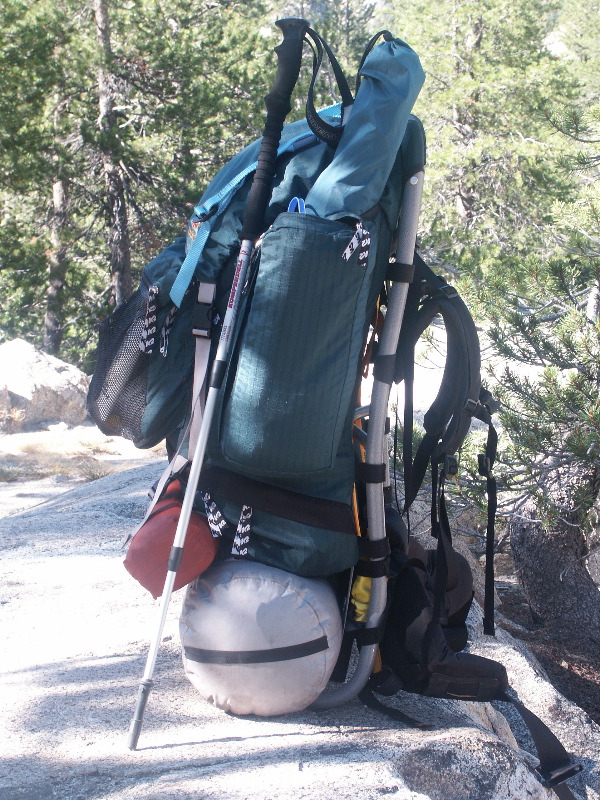
Containers. What kind of containers can you use for a disaster supply kit? Some people like backpacks, which can be worn on the back. Others like wheeled duffle bags. Containers should be large enough to carry your essential emergency supplies yet light enough, when fully packed, to be lifted and/or carried. You may end up putting your disaster supply kit in a car, wheeling it down a street, or carrying it with you, depending on the situation and on your own strength and endurance. Ideally, containers should be durable, water-resistant, and convenient to carry, use, and repack.

Internal Organization. Some people like containers with built-in internal compartments, but clear plastic, heavy-duty, 1-gallon zip-locking freezer bags also work very well to organize your gear and create compartments for each category of essential supplies. You can also write the supply category name on each bag to make organization and future reference easy. For example, you might have a bag or two identified for each of the following: water, food, clothing, bedding, money, navigation, food preparation, fuel and light, personal supplies, sanitation, communications, health and first aid, tools and equipment, personal protection, infant needs, and critical documents. In upcoming Provident Principles and Practices newsletters, we will discuss each of these supply categories in greater detail and review the kinds of items in each category that may be particularly useful to you.

For more, see www.fema.gov/areyouready/assemble_disaster_supplies_kit.shtm

Photo credits:

Other images: D. or S. Edwards

Sunday, January 4, 2009

Cooking Oil

Provident Principles and Practices
© David Edwards, 2009


PRINCIPLES: The LDS Provident Living Web site suggests that we may wish to consider adding to our basic and extended food supplies some additional foods and food preparation items such as cooking oil.

While the brethren have not specified exactly what we need to store, they have recommended that we focus on vital foods supporting life. One of those that they mention is cooking oil. (See the First Presidency Letter to the Church, dated June 24, 1988.)

One of the most extensive discussions of cooking oil in Church literature is that of F. Enzio Busche, writing in the June 1982 issue of the Ensign. He felt that the most valuable food item in Germany during a time of starvation was cooking oil. It's value was great, with one quart being readily traded for other valuable commodities such as fruit or root vegetables in the hundreds of pounds. Cooking oil enhanced the flavor of items not even normally considered foods, such as wild leaves and roots.

In the LDS Church booklet called Essentials of Home Production & Storage, copyrighted in 1978, the authors recommend storing about 20 pounds of fat or oil per person per year.

PRACTICES: Some oil and/or fat is essential for health. Many people suggest storing about 10 quarts of cooking oil per person per year. That is approximately equivalent to the 20 lbs/person per year recommended in Essentials of Home Production and Storage. Purchase cooking oil fresh. Check expiration dates. Generally, it is best to store cooking oil in airtight containers.

Even in unopened bottles on the shelf, most healthful cooking oils tend to go rancid relatively quickly, within six to twelve months. Light, oxygen and heat are the main culprits. Keep oil in opaque bottles and/or out of light. If possible, store oil in glass or metal containers, impermeable to oxygen. Stored oil generally lasts longer in a refrigerator, and even longer in a freezer, perhaps as much as several years. Olive oil tends to freeze well and last quite a long time. After freezing, cooking oil may turn thicker and cloudy, but it becomes fluid and transparent upon warming to room temperature. Rotate cooking oils regularly, using older product first.

In an emergency, cooking oils can be used as a source of lamplight, with a twisted multistrand cotton-string wick or similar wick placed in the oil on a wire guide with a little bit of the wick remaining above the oil surface to allow the oil to wick up for burning. Olive oil burns cleanly.

For info on cooking-oil lamps, see www.judyofthewoods.net/lamp.html; www.instructables.com/id/Make-an-oil-burning-candle/; and www.thriftyfun.com/tf45633038.tip.html. For Church counsel on storage foods and amounts, see www.providentliving.org/content/display/0,11666,7498-1-4070-1,00.html.

Wednesday, December 31, 2008

Resolutions for a New Year’s Supply

Provident Principles and Practices
© David Edwards, 2008


PRINCIPLES: For many years, the counsel to latter-day saints was to obtain a year’s supply of food. Recently, the counsel of the First Presidency has shifted to first, obtaining a three-month’s supply of foods that our families normally eat, and after that, working on a longer-term supply – one that will provide us with sufficient food to stay alive for a long time. They suggest that we include in our longer-term supply grains and legumes – items that may keep for up to 30 years if properly packaged and stored. The Brethren realize that some of us have financial constraints or space issues limiting how much we can acquire and maintain. However, they suggest that we get and store as much as our individual situations allow. For some of us, whose supplies have dwindled, it may mean getting a new “year’s supply”.

Why do home storage? The First Presidency has indicated that the Lord, out of His love for us, has commanded us to “prepare every needful thing” (see D&C 109:8). He wants us to be ready so that, when difficulties arise, we can take care of ourselves and our neighbors, and we can also provide support to our bishop as he cares for others. Let’s resolve this new year to get a supply.

PRACTICES: Let’s consider what would be required to extend a three-month’s supply to a year’s supply for one adult using just grain and legumes. For a nine-month supply of grain and legumes, using the food storage calculator found at http://providentliving.org/content/display/0,11666,7498-1-4070-1,00.html, we see that the amount of grain needed would be 225 lbs, and the amount of dry beans and other legumes would be 45 lbs. Let’s say that, for grains, for example, we get half wheat, one-quarter rice, and one-quarter oats. For legumes, let’s say that we get one-third black beans, one-third pinto beans, and one-third white beans. Going to the LDS Home Storage Center price list at http://providentliving.org/pfw/multimedia/files/pfw/pdf/120132_HSOrderForm_US_JAN_09_pdf.pdf, we see that the grain (51 cans) would cost $155, and the beans (9 cans) would cost $47, for a total of $202. The sixty cans would fill exactly 10 cases or boxes. 10 cases can often be stacked in one corner of a closet to the ceiling, occupying only about 1.7 sq. ft. of floor space.

So, for $202 and 1.7 sq. ft. of extra floor space, you can extend a three-month supply for one adult to a year supply. Expenses for a small child may be somewhat less. For a family, you basically multiply the dollar and space amounts by the number in the family.

Do we believe the prophets’ warnings that, upon this land, there will come economic disaster, destructive hail, famine, plague, earthquake, war and desolation? Will we be ready? Will we act while it is still possible to act? If, after all we can do, we still haven’t stored as much food as we would like, then the Lord will bless us for what we have done. If we ignore the Lord’s counsel, however, we have no promise. We need to ask ourselves, “What is stopping me?”

Which of your children and/or grandchildren would you like to go hungry if times get rough?

See Church counsel on obtaining a reserve of food at http://providentliving.org/fhs/pdf/WE_FamilyResourcesGuide_International_04008_000.pdf

Photo credits:

Tuesday, December 23, 2008

Self-Reliance and Reliance on the Lord

Provident Principles and Practices
© David Edwards, 2008


PRINCIPLES: Bruce R. McConkie, in the April 1979 General Conference, explained that self-reliance involves using our agency to become independent of the world, while still exercising full trust and dependence on the Lord. It is our task to resolve the temporal challenges that we face.

PRACTICES: Self-reliance involves preparation through acquisition of useful knowledge and skills, engagement in rewarding work that brings in an income, maintenance of our physical well being, storage of food and other needed things, use of money in wise ways, and development of appropriate behaviors, thoughts and feelings in regard to ourselves and others. The Church provides us with useful instruction at www.providentliving.org/content/display/0,11666,2591-1-1099-1,00.html. An overview is provided below.

Education. Gordon B. Hinckley, on p. 172-173 of Teachings of Gordon B. Hinckley, encourages us to acquire as much education as possible. It does not matter what field of endeavor we choose, so long as it is reputable. He counsels us to get training, and to do our best at that training. This may require foregoing other things for a while. Education and training are investments that bring big returns throughout life.

Employment. Our employment matters. At the Church Web site above, you can do research on the following topics: (i) finding employment opportunities, (ii) learning tips for getting hired, (iii) posting employment positions, (iv) utilizing employment specialists and employment resource services, (v) participating in the professional placement program, and (vi) visiting employment related Web sites.

Health. Many of us can do more to protect and build our health, vital to self-reliance. Some good suggestions are found at the Church Web site above. These relate to dental care, exercise, health, health care, major medical expenses, nutrition/diet, and the Word of Wisdom.

Home Storage. The First Presidency, on page 1 in All Is Safely Gathered In: Family Home Storage, Feb. 2007, counsels us to become ready for challenges ahead by developing basic food and water storage and savings.

Resource Management. Good resource management involves (i) payment of tithes and offerings, (ii) avoiding unnecessary debt, (iii) saving for the future, (iv) keeping promised obligations, (v) being frugal and avoiding waste, (vi) managing time wisely, and (vii) sharing time, talents, and resources in service to others.

Social and Emotional Strength. The Lord has provided resources on the Web to help us deal with a wide range of social and emotional issues. Topics include abortion, abuse, abuse help line, adoption, Alzheimer's disease, anxiety disorders, birth parents, caring for the elderly, depression, depression in the elderly, eating disorders, foster care, LDS family services, parenting, stress, substance abuse, and suicide.


Photo credits:

Educational setting: http://antarcticsun.usap.gov/antarcticsun/science/images/BPRC_outreach.jpg
Two women: http://consensus.nih.gov/IMAGES/Art/118.jpg
Money: www.eia.doe.gov/kids/energy_fungames/energyslang/images/money-l.jpg
Family walking in park: www.nps.gov/pub_aff/parks2008/YELL_family-01.jpg
Wheat: www.pueblo.gsa.gov/cfocus/cfallergies04/wheat.gif
Interview: www.transmission.bpa.gov/images/education/interview.jpg

Wednesday, December 17, 2008

Defense of Self and Family

Provident Principles and Practices
© David Edwards, 2008


PRINCIPLES: In General Conference, April 1967, Ezra Taft Benson said that a man needs to be ready to protect himself physically. This is also stated in his book God, Family, and Country on pp. 331-332 and 406.
. . .
"There is one principle which is eternal; it is the duty of all men to protect their lives and the lives of the household whenever necessity requires, and no power has the right to forbid it, should the last extreme arrive. . . ." – Joseph Smith, Letter to Emma Smith, June 27, 1844, recorded by B.H. Roberts, 1912, History of the Church, v. VI, The Church of Jesus Christ of Latter-day Saints, p. 605.
. . .
“We believe that all men are justified in defending themselves, their friends, and property, and the government, from the unlawful assaults and encroachments of all persons in times of exigency, where immediate appeal cannot be made to the laws, and relief afforded." – Doctrine and Covenants 134:11 (See also D&C 98:14-16, 22-37 for additional, important instruction).

“And they were doing that which they felt was the duty which they owed to their God; for the Lord had said unto them, and also unto their fathers, that: Inasmuch as ye are not guilty of the first offense, neither the second, ye shall not suffer yourselves to be slain by the hands of your enemies. And again, the Lord has said that: Ye shall defend your families even unto bloodshed. Therefore for this cause were the Nephites contending with the Lamanites, to defend themselves, and their families, and their lands, their country, and their rights, and their religion." – Alma 43:46-47

"Now the Nephites were taught to defend themselves against their enemies, even to the shedding of blood if it were necessary; yea, and they were also taught never to give an offense, yea, and never to raise the sword except it were against an enemy, except it were to preserve their lives." – Alma 48:14

The First Presidency and Council of the Twelve Apostles of The Church of Jesus Christ of Latter-day Saints, in a 1995 statement entitled "The Family: A Proclamation to the World," indicated that it is part of God's plan for each father to provide leadership for his family, to love them, to live righteously, to provide for the family's needs, and to protect the family.

PRACTICES: God can reveal to us our duty with respect to protecting ourselves and our families.
...
Although self-defense is permissible as a last resort when innocent life is in imminent danger, we need guidance by the Spirit in all related matters since
...
* human life is sacred
. . .
* decisions made in self-defense can have eternal consequences
. . .
* legal penalties for any mistakes can be substantial

We also need to recognize local, state and Federal laws. Church policy that weapons do not belong in houses of worship is described at: http://newsroom.lds.org/ldsnewsroom/eng/news-releases-stories/no-firearms-in-latter-day-saint-houses-of-worship


Photo Credits:

Ezra Taft Benson: www.usda.gov/img/content/benson.gif

Saturday, December 13, 2008

Social Distancing During a Pandemic

Provident Principles and Practices
© David Edwards, 2008


PRINCIPLES: To receive the greatest possible protection during a pandemic, we are counseled by health experts with the Church of Jesus Christ of Latter-day Saints to practice effective social distancing and hand hygiene.
. . .
PRACTICES: Eight fact sheets published by the Church of Jesus Christ of Latter-day Saints and Web pages at http://www.pandemicflu.gov/ provide excellent direction on minimizing our exposure to viruses that can cause pandemic illness.


Minimizing the potential for the spread of pandemic illness can be accomplished by (i) having each member of your nuclear family keep a safe distance away from persons outside of the nuclear family during a pandemic wave, (ii) eliminating the potential for droplet transmission, and (iii) avoiding touching objects that may have become contaminated with virus.


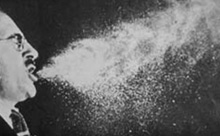
The major means by which pandemic virus is communicated from one person to another is thought to be exposure to respiratory droplets from coughs, sneezes, or talking. Viruses in the droplets can come in contact with mucous membranes in the nose, mouth or eyes and cause potentially deadly disease.


Viruses on objects can be picked up from inanimate objects as well. Typical disease-causing viruses are known to be able to survive in viable form on environmental surfaces outside the human body for up to a day or longer. Inanimate objects include door knobs, mail, papers, keyboards, toys, and groceries. Frequent and thorough hand washing, and proper wearing of protective gloves when necessary, may be helpful in minimizing exposure to viruses.


During a pandemic, keeping one's distance from persons other than members of the nuclear family is critical. Anyone not practicing strict social distancing may be a potential virus carrier. While some persons may not display evident symptoms at a given moment, they may still be contagious. Stay at least six feet away from others in public. Do not shake hands or engage in other forms of physical contact with them.


A number of other stategies may be used to further implement social distancing. An effective long-term measure in many instances may be voluntary seclusion, sometimes called reverse quarantine. In other cases, isolation or quarantine may be necessary.


Social distancing may entail voluntary seclusion at home during a time that a pandemic wave is sweeping throughout a community. This can keep you and your family out of contact with others who may be ill and who may be capable of transmitting to your family a potentially deadly disease.


Social distancing may also involve isolation. If you do get sick with pandemic illness, then you must remain isolated from others until you get better; otherwise, other people could get very sick or die by contacting you or by getting too close to you when you cough or sneeze or talk with them.


Social distancing may also involve quarantine. If you've been in contact with others who may have been exposed to pandemic virus, then you yourself need to stay secluded for a lengthy period to ensure that you are not contacting healthy individuals and putting them at risk during a time when you may be contagious. A quarantine for H5N1 pandemic influenza infection should generally be for 10 days unless health officials tell you differently.


If you have a child or other family member that gets sick with a pandemic illness, and you attend to him or her, then you need to wear personal protective equipment during your ministrations. Moreover, you must stay quarantined, keeping out of contact with any others. This is because you may have acquired virus from this person and thereby have become capable of spreading it to others. After exposure, you may be contagious for a period of time before you even start to feel ill.


Whenever pandemic virus is present in the community, or approaching rapidly from another location, it may be best for your children to stay at home or in the yard and away from any other children who might be carrying potentially deadly virus.


Social distancing through voluntary seclusion, isolation, or quarantine may require preparing items not discussed in the eight pandemic fact sheets but discussed elsewhere on the www.providentliving.org/ Web site. Proper provisioning includes storing food and water at home. A number of pandemic influenza researchers acknowledge a potential need for this kind of preparation. For example, Dr. Robert Webster, renowned pandemic influenza researcher, is said by ABC News to have "stored a three-month supply of food and water at his home in case of an outbreak.”


For more information, please see http://pandemicflu.gov/health/index.html and study carefully the eight pandemic fact sheets published by the Church of Jesus Christ of Latter-day Saints; these are found at http://providentliving.org/pfw/multimedia/files/pfw/pdf/113475_PandemicPlanningPDFsCombined_pdf.pdf. You can read the ABC News report at http://abcnews.go.com/WNT/AvianFlu/story?id=1724801&page=1


Photo Credits:

Sick Man: www.cdc.gov/diabetes/pubs/images/maninbed.gif

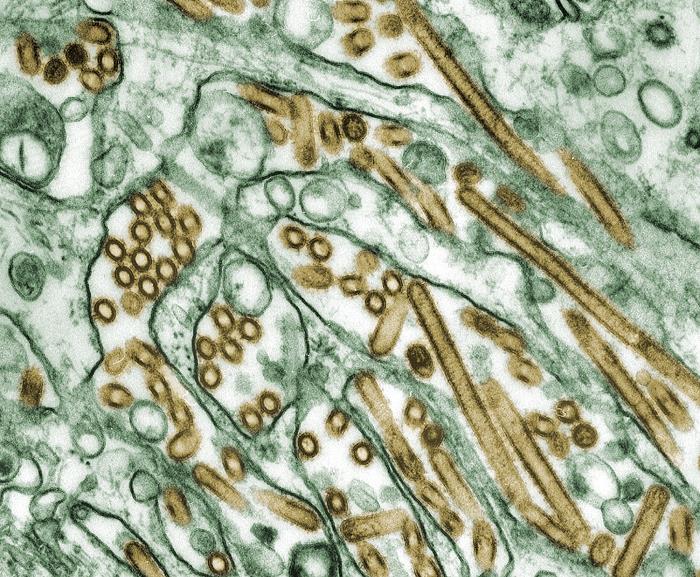
H5N1: http://phil.cdc.gov/PHIL_Images/1841/1841_lores.jpg

Sick Child: http://kidney.niddk.nih.gov/kudiseases/pubs/bedwetting_ez/images/ChildSick.gif

Can All You Can Poster: www.nal.usda.gov/fnic/history/8460v.gif

Saturday, December 6, 2008

Planning for Pandemic Influenza: DHHS Advice

Provident Principles and Practices
© David Edwards, 2008


PRINCIPLES: http://www.providentliving.org/ links to the Web page http://www.pandemicflu.gov/plan/tab3.html, a U.S. Department of Health & Human Services resource for pandemic influenza planning. Excerpts from this resource are copied here.
. . .
PRACTICES:
“Social Disruption May Be Widespread. Plan for the possibility that usual services may be disrupted. These could include services provided by hospitals and other health care facilities, banks, stores, restaurants, government offices, and post offices. . . . Consider how to care for people with special needs in case the services they rely on are not available.

“Being Able to Work May Be Difficult or Impossible. . . . Plan for the possible reduction or loss of income if you are unable to work or your place of employment is closed. . . .

“Schools May Be Closed for an Extended Period of Time. Help schools plan for pandemic influenza. . . . Plan home learning activities and exercises. Have materials, such as books, on hand. Also plan recreational activities that your children can do at home. Consider childcare needs.

“Transportation Services May Be Disrupted. . . . store food and other essential supplies . . . Prepare backup plans for taking care of loved ones who are far away. Consider other ways to get to work, or, if you can, work at home.

“People Will Need Advice and Help at Work and Home. Think about what information the people in your workplace will need . . . Find support systems – people who are thinking about the same issues you are thinking about. . . .

“Be Prepared. Stock a supply of water and food. During a pandemic you may not be able to get to a store. Even if you can get to a store, it may be out of supplies. Public waterworks services may also be interrupted. Stocking supplies can be useful in other types of emergencies, such as power outages and disasters. Store foods that are nonperishable (will keep for a long time) and don't require refrigeration, are easy to prepare in case you are unable to cook, require little or no water, so you can conserve water for drinking. See a checklist of items to have on hand for an extended stay at home.

“Stay Healthy. Take common-sense steps to limit the spread of germs. Make good hygiene a habit. Wash hands frequently with soap and water. Cover your mouth and nose with a tissue when you cough or sneeze. Put used tissues in a waste basket. Cough or sneeze into your upper sleeve if you don't have a tissue. Clean your hands after coughing or sneezing. Use soap and water or an alcohol-based hand cleaner. Stay at home if you are sick. . . .

“Get Informed. Knowing the facts is the best preparation. Identify sources you can count on for reliable information. If a pandemic occurs, having accurate and reliable information will be critical. . . .”

Text excerpted from Department of Health & Human Services Web site www.pandemicflu.gov/plan/tab3.html (no copyright).
. . .
Photo Credits:
. . .

Bank closures: www.fdic.gov/bank/analytical/firstfifty/newspapers.jpg

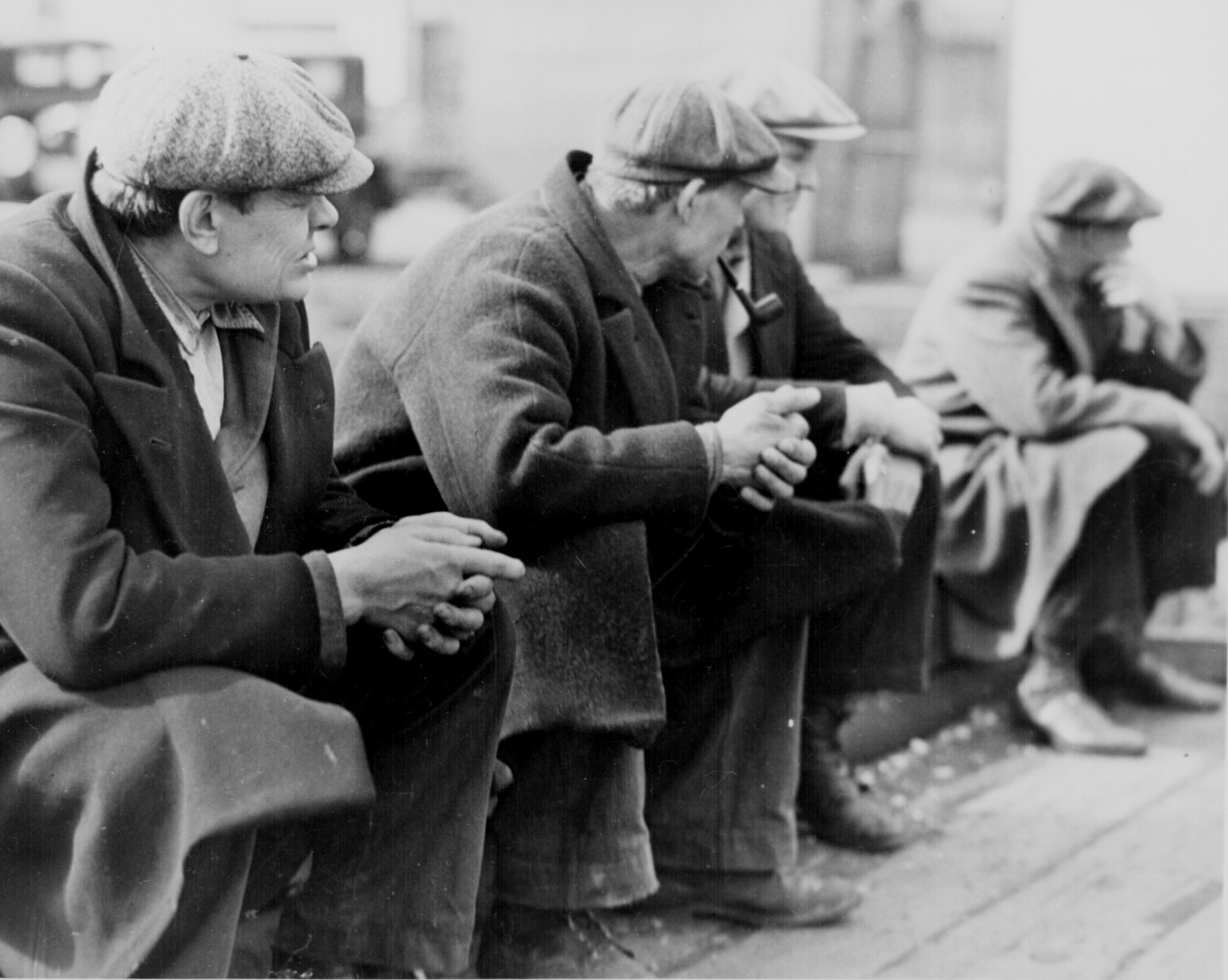
Out of work: www.archives.gov/research/american-cities/images/american-cities-082.jpg

Books: http://pubs.niaaa.nih.gov/publications/Science/Image/books.gif

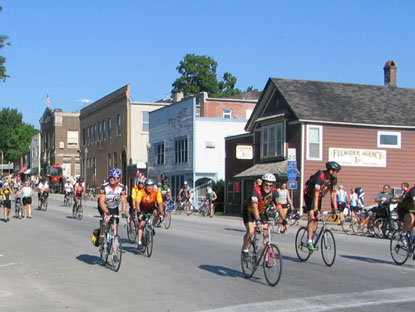
Bicycling: www.nps.gov/heho/planyourvisit/images/RAGBRAI_2006_415w.jpg

Caring for others: www.cdc.gov/about/images/careers/nurse1.jpg

Stored foods: http://lcweb2.loc.gov/learn/features/immig/images/canshelf.jpg

Sneeze: www.fnal.gov/pub/today/safety/sneeze.jpg

Pandemic preparedness: www.fcc.gov/pshs/images/events/Pandemic_summit_poster.jpg

Thursday, December 4, 2008

Introduction to Pandemics and Preparations

Provident Principles and Practices
© David Edwards, 2008


PRINCIPLES: The Church wants us to understand pandemics and become prepared for them. Resources that we can use to prepare for pandemics are found at the ProvidentLiving Web site.

A pandemic is a scourge or pestilence involving the rapid spread of a potentially deadly, easily communicable disease throughout the world. Pandemics occur on average about three times per century. A relatively serious pandemic took place in 1918-1920. It is estimated to have killed 20 to 100 million people worldwide, with a worldwide case fatality rate of about 2.5%.

Scientists say that the next pandemic is not a matter of if, but when.

The greatest concern now is about pandemic influenza, a viral disease. Most influenza viruses now circulating the globe are relatively mild, having mutated over time to have become less virulent. Ordinary influenza kills some infants, some elderly, and some immunocompromised persons, but in most cases, it is not fatal. At various times in history, however, influenza viruses have mutated into highly lethal forms that have for periods swept across the earth, killing many of their victims.

A current virus of concern, H5N1, affects mostly birds. The disease caused is often referred to as avian or bird flu. H5N1 occasionally also attacks people, causing a very virulent form of influenza. Influenza caused by this virus kills about 60% of people contracting it. Half of those dying are otherwise healthy young adults or children. Find more information at http://www.pandemicflu.gov/.

So far, H5N1 has not mutated to the point where human-to-human contagion is easily sustained. However, a number of cases are documented in which individuals have transmitted disease to caretakers or family members. Again, the current case fatality rate is about 60%. Scientists believe that a high likelihood exists that the virus causing this disease will mutate at some point and become easily transmissible, causing a pandemic that will cause untold misery throughout the world.

No one knows how high a pandemic case fatality rate will be. Scientists expect it to be much less than 60%. In nearly all simulations, they are using values of 2.5% or less. But these are just guesses.
Tamiflu and other antiviral drugs are not expected to be able to stop the next pandemic. These drugs may reduce the impact of the disease, but they will not cure it or prevent it. Only a small fraction of the population will have access to antivirals. Creating an effective vaccine can be done only after a virus mutates and a pandemic starts. Vaccine development may take up to six months. By that time, many millions may have died. Access to any vaccine will be limited. Social chaos is predicted.

PRACTICES: Several things can be done, but only if proper preparations are made. These involve personal hygiene, social distancing (e.g., keeping apart from people; or sequestering within homes), isolation of the ill, and 10-day quarantining of apparently healthy people exposed to potentially ill people before the apparently healthy people can associate again with others. Eight fact sheets from the Church of Jesus Christ of Latter-day Saints can help us plan and prepare:
http://providentliving.org/pfw/multimedia/files/pfw/pdf/113475_PandemicPlanningPDFsCombined_pdf.pdf


Photo Credits:

Patients during pandemic influenza of 1918: http://1918.pandemicflu.gov/pics/photos/Iowa_Flu2.jpg

Mother Earth: http://svs.gsfc.nasa.gov/vis/a000000/a002600/a002682/apollo17_earth_web.jpg

H5N1 virus: www.nih.gov/news/research_matters/october2006/images/1918flu_l.jpg

Tamiflu molecular structure: www.ehponline.org/members/2006/9574/fig1.jpg

Hand hygiene: www.cdc.gov/Features/HandFootMouthDisease/HandFootMouthDisease_370px.jpg