Sunday, November 16, 2008

Milling Grains and Beans for Cooking in Disasters

Provident Principles and Practices
© David Edwards, 2008


PRINCIPLES: In Essentials of Home Production & Storage, 1978, Church members are encouraged to include grinders as part of their expanded home storage.

PRACTICES: Grinding or milling can prepare wheat, other grain, or older beans for use in disaster cooking. After grain is cracked, crushed or ground, it can be used in hot cereal or baked goods. Baked goods made with fresh flour can be delicious. For bread making, finely ground flour is desirable. Ground soaked beans can be used to thicken soups or stews, mix in with flour, or make bean cakes or dips, adding protein. Whole beans may cook in hours; ground beans cook in minutes.

Electric milling. Specialized electric grinders can mill wheat, other grains and beans if AC power is available. While electric mills are much more convenient to use than manual mills under normal conditions, electric mills are useless if the power goes out. Long-term outages can happen.

Manual milling. For milling when AC power is out, a manual mill is essential. A manual grain mill of high quality is one of the most important emergency tools to own. Milling grain on any kind of manual mill requires hard labor, but milling grain on a low-quality manual mill is a real grind! Also, low-quality mills may not last long, and they may not be able to mill grain finely enough for baking.

Best manual grain mills. Good manual grain mills are not cheap. You can use Google to identify a good one. Many experts recommend one particular mill. If you get a mill with stones, get burrs, too.

Stones and burrs. Manual grain mills use stone plates or metal burrs for grinding. Dry grains, such as wheat, can be ground with stone. Stone grinding is needed to obtain fine flour. Stone cannot be used, however, for grinding grains or beans having more than 10-12% oil or moisture. These smear on stone plates, reducing grinding power and/or plugging a mill. For oily or wet grains or beans, metal burrs are required. Use high-quality burrs from which no metal tends to flake off during use.

Pipe method for cracking grain. A pipe that fits closely within another, shorter pipe can be used to crush and crack small quantities of grain or bean at a time. Slide the inner pipe up and bring it down hard repeatedly, cracking the grain or bean against a hard bottom surface, such as a hard metal plate. Remove the cracked grain or bean from the pipes and use it in cooking. Even a child can crack grain or bean this way. A similar method utilizes a can and several pipes taped together.

Mortar and pestle and other systems for cracking grain. Mortars and pestles made of stone or porcelain can crack and grind small quantities of grain at a time . . . very slowly! You can use a pestle to pound grain and crack it, crush it, and grind it on the bottom and sides of a mortar. In a pinch, you can grind a little grain in a coffee/spice grinder or between two smooth paving stones.

For more, see www.youtube.com/watch?v=U4kP9EgmBjQ&feature=related; www.youtube.com/watch?v=LWc_k3lXXpA; http://www.countrylivinggrainmills.com/index.php?action=articles&which=Bike.txt; http://ce.byu.edu/cw/womensconference/archive/2005/sharing_stations/pdf/49c.pdf (also 49d.pdf – change c to d); www.youtube.com/watch?v=cvLNOBTyxHw; www.sharingsustainablesolutions.org/?page=172


Photo Credits:

Cracked wheat: http://upload.wikimedia.org/wikipedia/commons/b/b8/Sa-cracked-wheat.jpg

Mortar and Pestle: www.nlm.nih.gov/hmd/breath/breath_exhibit/Asthma/asthma_images/stock/IIICa71.gif

Sunday, November 9, 2008

Using Beans from Your Long-Term Storage

Provident Principles and Practices
© David Edwards, 2008


PRINCIPLES: Elder Keith B. McMullin, in General Conference, April 2007, suggested that Church members first obtain a reserve of food that may last several months, and, second, acquire basic long-term food storage items that can keep individuals or a family alive. Legumes is a category of food storage that he mentioned specifically. – Elder Keith B. McMullin, General Conference, April 2007

PRACTICES: Effective use of stored legumes, and, in particular, beans depends on your mastery of several important skills.

Sorting. Beans need to be sorted before being cooked. When sorting, remove rocks, dirt, organic debris, and any beans that are strangely shaped, shriveled, too small, with holes, or discolored.

Rinse- and soak-water. Rinse beans prior to soaking or cooking to remove any dirt or soluble foreign matter. Water used to soak beans needs to be discarded prior to cooking beans.

Soaking and cooking. Most dry beans require soaking before cooking. Soaking greatly reduces cooking time. Soak beans six to 12 hours (e.g., overnight) using three cups of water to one cup of beans. Beans should then be cooked until tender. This usually takes one to four hours. Lengthy soaking and/or pressure cooking may be needed for older beans. A few types of beans, such as lentils, can cook relatively fast, even without a pre-cook soaking. Cooking can be achieved without continuous lengthy boiling by putting rinsed, unsoaked beans in a pot, bringing the beans to a boil, boiling for two minutes, and then simmering at just below a boil for several hours until beans become tender. Season beans to taste. Be sure also to acquire and store an alternative-fuel stove and enough fuel and/or a sun oven for cooking beans under emergency conditions (no utilities).

Old beans. Old beans are difficult to rehydrate. They get hard. Cooking in a pressure-cooker may render them tender. You can also soften or mushify once-hard beans by soaking them in water with added baking soda. Hard old beans can also be ground in a grinder, using grinding stones/burrs sufficiently strong to grind beans. The protein-rich flour produced can be used as a soup thickener.

Adding flavorings. To avoid toughening beans, add salt, sugar, vinegar, tomatoes, and/or lemon juice after having cooked beans and they have become soft. Garlic and onion are some other flavorings.

Digestion. Flatulence caused by bacterial breakdown in our guts of poorly digestible sugars from beans can be lessened by (i) discarding rinse water, (ii) changing cooking water several times, (iii) cooking beans until soft, (iv) rinsing beans just before eating them, and (v) eating small, 3-oz helpings. Sprouting beans first also helps break down the sugars. Research shows that after most people have been regularly eating modest amounts of beans for 3 to 4 weeks, flatulence problems are no greater than flatulence problems present prior to including beans in the diet.

For more, see http://extension.usu.edu/foodstorage/htm/dry-beans; www.mayoclinic.com/health/legumes/NU00260; www.legumechef.com/English/consejos_en.htm (these two sites contain much good advice; please ignore the outdated advice about soaking beans in just warm water after cooking, which has been found to potentially lead to growth of disease-causing spores); www.fasebj.org/cgi/content/meeting_abstract/21/6/A1077-b; http://preparetodaynewsletter.blogspot.com/2008_03_01_archive.html (go about 1/2 way down).

Graphics credits:

Bean soup: http://fitness.ksc.nasa.gov/images/fitness/health/recipes/white_bean_butternut_sq.jpg

Other photos: used by permission from M.T. from her blog site

Saturday, November 8, 2008

Use and Long-Term Storage of Legumes

Provident Principles and Practices
© David Edwards, 2008


PRINCIPLES: “Lay up stores of corn, wheat, oats, peas, beans, buck wheat, and every thing else that can be preserved: for you will see a day when you will want it; and it will be when we shall feel the effects of famine, and when the United States have not any food. – Heber C. Kimball, Journal of Discourses, volume 4, p. 330.

In a Letter to Church Members dated June 24, 1988 the First Presidency at the time asked us in our storage activities to focus on vital basic foods that can help us survive. Among the basics mentioned were legumes.

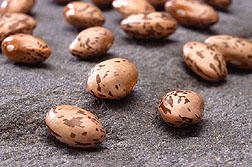
PRACTICES: Legumes include peas, beans, lentils, and peanuts. Legumes are nutritious, offering those who eat them a rich source of amino acids, minerals, and vitamins. To get a complete protein, you need only eat legumes on the same day as other foods providing complementary amino acids, such as grains. Cooked legumes can be used in soups, stews, casseroles, and salads. Most uncooked legumes can be sprouted. Proper storage, preparation and consumption of legumes allows them to serve as a rewarding component of one’s diet. Legumes tend to be relatively inexpensive. This, the first part of a two-part series, focuses on kinds and uses of legumes, and on long-term legume storage. The second part will address sorting, rinsing, soaking, cooking, and digesting beans.

Kinds of legumes. Legumes that can be purchased locally and stored long-term include adzuki beans, black beans, black-eyed peas, chick peas (or garbanzo beans), great northern beans, kidney beans, lentils, lima beans, mung beans, navy beans, peanuts, peas, pink/red beans, and pinto beans.

Uses of legumes. Adzuki beans can be used in chili in place of kidney or small red beans. Black beans, as well as pinto beans, are used in many Mexican and Latin-American dishes with rice. Black-eyed peas cook quickly; they are often used as a side dish. Chick peas are used in salads and in making hummus and falafel. Great northern beans are used for baked beans or in salads, casseroles, soups and stews. Though they must first be cooked to break down a toxin, kidney beans can be added to salads or chili. Lentils cook quickly without pre-soaking and are great for soups, stews and far-eastern dishes. Lima beans are used as a side dish or in succotash, soups or casseroles. Mung beans, like lentils, cook quickly without pre-soaking. Navy beans are favorites in soups and baked beans. Peanuts do not store well, but some homogenized peanut butters can store for up to two years in jars. Pink/red beans work well for chili. Peas, if split, are good for soup. Uncooked beans can be sprouted and eaten. Beans can be ground for refried (Pinto) beans or soup thickener.

Storage of legumes. Legumes canned in liquid can be stored for several years. Dry legumes can be stored in #10 cans for 10+ years. Dry legumes should be stored in an oxygen-free environment, one that is cool, dark and dry. Beans stored dry tend to get hard after several years but are still edible; they need softening before cooking and eating, or they can be ground. Softening can be achieved by pressure-cooking or by soaking with added baking soda. Freeze-dried legumes, including green peas and green beans, can be stored, if processed very dry, for one or more decades.

For more, see www.mayoclinic.com/health/legumes/NU00260; http://ift.confex.com/ift/2005/techprogram/paper_28584.htm; http://extension.usu.edu/foodstorage/htm/dry-beans

Graphics credits:

Fresh green beans: www.fruitsandveggiesmatter.gov/month/images/fresh_beans_01.jpg


Mixed dry beans: www.fruitsandveggiesmatter.gov/month/images/beans_h.jpg


Great northern beans: www.ars.usda.gov/is/pr/2004/041223.bean.jpg


Pinto beans: www.ars.usda.gov/is/graphics/photos/jul98/k8089-2i.jpg


Black-eyed peas: www.loc.gov/rr/scitech/mysteries/images/blackeyed-peas-4.jpg


Chick peas (garbanzo beans): www.ars.usda.gov/is/pr/2005/051228.chickpeas-i.jpg


Red lentils: www.girlshealth.gov/nutrition/images/beans.jpg


Mung beans: http://plants.usda.gov/gallery/standard/vira4_001_shp.jpg


Red beans in chili: http://fitness.ksc.nasa.gov/images/fitness/health/recipes/layeredchipfinal.jpg

Sunday, October 26, 2008

Living Well in Perilous Times

Provident Principles and Practices
© David Edwards, 2008


PRINCIPLES: The Apostle Paul wrote, "This know also, that in the last days perilous times shall come." – 2 Timothy 3:1

. . .

In the October 2008 General Conference, a number of General Authorities of the Church of Jesus Christ of Latter-day Saints made allusions to world economic problems and other challenges we are currently facing or may face in the future. Several of them used language similar to that of the Apostle Paul in 2 Tim 3:1. These General Authorities included Elder Dallin H. Oaks, Elder James J. Hamula, and Elder Boyd K. Packer, each referring specifically to the "perilous times" in which we live.

. . .

Some other General Authorities also chose to employ similar terms. Elder L. Tom Perry referred to bad times, periods of sadness, and times of scarcity. Elder Dieter F. Uchtdorf spoke of times of seemingly unbearable darkness. Elder Joseph B. Wirthlin mentioned difficult times, and times of disappointment, suffering and sorrow. Elder Boyd K. Packer employed the expression "troubled times" as well as the term "perilous times." The name of his talk was "The Test."


Notwithstanding their use of this type of language, the individual and collective tenor of their comments was not one of gloom. Rather, it was one of great positiveness and hope.

. . .

Elder L. Tom Perry quoted the poet Robert Browning: "The best is yet to be". Elder Perry encouraged us to remain positive and optimistic, to be persons of faith and hope, with our understanding that the Gospel of Jesus Christ is true, with the best of times yet to be.


Elder Dallin H. Oaks asked us to consider how, in these perilous times, we can maintain the influence of the Holy Ghost in our lives to help us make decisions as we are led along the narrow road to eternal life.


Elder Dieter F. Uchtdorf indicated that we can withstand even times of seemingly unbearable darkness as we hold to the heaven-sent doctrines of the restoration.


Elder Joseph B. Wirthlin pointed out that happy people tend to learn from their challenges and in the process grow in strength, wisdom and contentment. Responding appropriately to difficulties can enlarge our comprehension, strengthen us morally as individuals, and fill our hearts with empathy for others.


Elder Jeffrey R. Holland reminded us in these difficult times not to allow fear to overwhelm us but to exercise faith in the Lord and stay true to those promises we have made to the Lord.


Elder Boyd K. Packer testified that, when times are tough, the Savior will always make a way for us as individuals, families and a Church to move ahead safely. Doing so, however, will require that we keep the Lord's commandments and partake of Gospel ordinances.

. . .

Finally, Elder Quentin L. Cook expressed that the Lord wants us to prepare for difficulties, including "lean years". He quoted the Lord saying, "If ye are prepared, ye shall not fear.


PRACTICES: The Brethren in this last conference unitedly have affirmed that we are currently facing and will continue to face perilous times. What perils we will yet face as individuals and families, perhaps only God knows. In what things can we expect to find safety? The Lord’s servants, as described above, have given their answers at the October 2008 General Conference. We can find safety in faith, hope, testimony, the Spirit of the Lord, a knowledge of divine principles, learning from our experiences, endurance, belief, remembrance of our covenants, obedience to the laws and ordinances of the Gospel, and preparedness. As we partake of the Gospel fully, this will help dispel fear from our lives.


Graphics credits:


Bible: www.senate.gov/artandhistory/art/special/Bassett/events/images_small/bible_outside.jpg

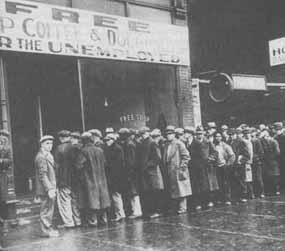
Food line: www.nps.gov/ozar/historyculture/images/Depression-Food-Line.jpg

Weary, Worried Woman: http://lcweb2.loc.gov/learn/community/images/depression.jpg

Robert Browning: http://edsitement.neh.gov/lesson_images/lesson630/Robert_Browning_Sml.jpg

Prophet of the Restoration: www.loc.gov/loc/lcib/0506-8/images/smith.jpg

Preparedness sign: www.sba.gov/idc/groups/public/documents/sba_homepage/serv_da_dprep_pic.jpg

Saturday, October 18, 2008

Long-Term Storage of Salt

Provident Principles and Practices
© David Edwards, 2008


PRINCIPLES: “You may also want to add other items to your longer-term storage such as sugar, nonfat dry milk, salt, baking soda, and cooking oil.” – www.providentliving.org

PRACTICES: Salt – sodium chloride (NaCl) – is an important long-term storage item. Three to five lbs/person/yr are needed for flavoring food. More salt may be needed for other purposes.

Salt as a Condiment. Salt brings out flavors in food. Processed foods generally contain a great deal of salt, and little additional salt is needed. On the other hand, most long-term storage foods contain almost no salt. Without added salt, most of these foods would taste very bland. Salt may be needed for flavoring stored foods in a long-term disaster in which processed food is of limited supply.

Electrolyte Replacement. Salt is needed to replace sodium chloride lost through bleeding, perspiration and crying. Without processed foods, people need a way to add salt to their diets.

Effects on Health and Lifespan. Some people, such as those who are overweight or who have high blood pressure, need to limit how much salt they add to their food. But, for most people, the amount of salt that they consume, as long as it is greater than that which is minimally needed, seems to have little impact on health or lifespan. In a disaster, salt solutions can provide soothing and therapeutic eye washes, mouth rinses, and throat gargles. Salt can also be used in intravenous solutions.

Salting and Pickling. Salting is one way to preserve certain foods. Most microbes cannot live in a highly salty environment. Meats and fish can be cured by salting. Pickles and sauerkraut are created by soaking cucumbers and cabbage, respectively, in salt solutions under appropriate conditions.

Oral Rehydration Solution. Certain gastrointestinal diseases cause extreme loss of electrolytes from the body due to repeated diarrhea and vomiting. Untreated, this may lead to severe illness or death. An ORS solution, consisting of 4 cups of water, ½ tsp salt, ½ tsp baking soda, 8 tsp sugar, and ¼ tsp salt substitute, sipped every few minutes, can restore electrolytes and preserve life. A little mashed banana or orange juice, if available, can be exchanged for ¼ tsp salt substitute to provide potassium.

Iodine. Iodide in iodized salt can help prevent retardation in infants and thyroid problems in others.

Industrial Processes. Salt is essential in many useful industrial and commercial processes. In a time to come when “we will live on what we produce”, salt may have significant value in production.

Other Uses. Salt is needed in MSR MIOX water purifiers to generate microbe-killing compounds. At 15-32 degrees F, salt can deice walkways for safety, as it depresses water’s freezing point.

For more, see http://providentliving.org/content/display/0,11666,7531-1-4062-1,00.html; www.springerlink.com/content/1032k6374735085u/fulltext.pdf; www.cmaj.ca/cgi/data/160/9/DC1/5; www.mja.com.au/public/issues/feb15/salt/nicholls.html; www.emedicine.com/MED/topic1187.htm; www.saltinstitute.org/37.html; www.saltinstitute.org/images/salt_uses.jpg; www.pamf.org/patients/ors.html; http://rehydrate.org/ors/index.html

Photo credits

Salt shakers: www.nhlbi.nih.gov/hbp/prevent/sodium/images/salt.jpg

Runners perspiring: http://www.americaslibrary.gov/assets/es/co/es_co_rdrace_1_m.jpg

A long life: http://iarchives.nysed.gov/Gallery/galleryDetail.jsp?id=1164&ss=EDU

Future pickles?: http://www.ars.usda.gov/is/graphics/photos/mar07/d730-30i.jpg

ORS being administered to baby: www.fic.nih.gov/images/ortphoto.jpg

Sunday, October 12, 2008

Silly Silly People

Provident Principles and Practices
© David Edwards, 2008
. . .

Silly Silly People

by S. Edwards and R. Rhymer


Noah told the people that the rain was going to fall,
Noah told the people they better get on the ball,
Noah told the people to repent and turn to God,
‘Cause God had had it up to here, and the wicked will be trod.

Those silly, silly people! Why were they all so blind?
We certainly would never be a people of that kind!

Lehi told the people that Jerusalem would fall,
Lehi told the people they better get on the ball,
Lehi told the people to repent and turn to God,
‘Cause God had had it up to here, and the wicked will be trod.

Those silly, silly people! Why were they all so blind?
We certainly would never be a people of that kind!

Samuel told the people as he stood upon the wall,
That Christ would come in five short years and save them from the fall,
Samuel told the people to repent and turn to God,
‘Cause God had had it up to here, and the wicked will be trod.

Those silly, silly people! Why were they all so blind?
We certainly would never be a people of that kind!

Our prophet tells the people that there’s not much time at all,
Our prophet tells the people they better get on the ball,
Our prophet tells the people to repent and turn to God,
‘Cause God has had it up to here, and the wicked will be trod.

So if we look into our pantries and find that they are bare,
And if the scriptures on our shelves show no wear or tear,
Could we be silly people? Are we possibly that kind?
That we refuse to hear our God, could we be, oh, so blind?

Copyright 1995 by Susan Edwards and Roweena Rymer

Used by permission

Thursday, October 2, 2008

The Lord, the Prophet, the Twelve and Safety

Provident Principles and Practices
© David Edwards, 2008


PRINCIPLES: Elder Henry B. Eyring, in his talk entitled “Safety in Counsel” (Ensign, June 2008, p. 4-9), states that the Lord greatly desires our safety and will protect those who accept His protection. The Lord speaks to us through prophets, warning us as needed, and providing the path for us to take that will lead us to safety.

Latter-day Saints who heed the counsel of the Quorum of the Twelve will find security and refuge in that counsel. The Lord has chosen them, and Church members who support and stay close to the Twelve will find safety in these actions. Although individual members of the Twelve may make mistakes, the combined voice of the Twelve will never be wrong. Those who oppose the counsel of the Twelve put themselves in grave danger. (See Spencer W. Kimball, Conference Report, April 1951.)

Latter-day Saints will never be led astray by the President of the Church, the First Presidency, or the First Presidency and Quorum of the Twelve as a whole. These brethren will not speak in opposition to the will of the Lord. (See Joseph Fielding Smith, Conference Report, Apr. 1972.)

Sometimes the counsel given by general authorities may not seem to square with our personal, political or social perspectives. However, our safety depends on following that counsel. The President of the Church is someone to whom we need to pay particular attention. (See Harold B. Lee, Conference Report, October 1970.

“Wherefore . . . thou shalt give heed unto all his words and commandments which he shall give unto you as he receiveth them, walking in all holiness before me; For his word ye shall receive, as if from mine own mouth, in all patience and faith. For by doing these things the gates of hell shall not prevail against you; yea, and the Lord God will disperse the powers of darkness from before you, and cause the heavens to shake for your good, and his name's glory.” D&C 21:4-5

PRACTICES: In these, the last days, perilous times will come. There is safety only in following the Lord Jesus Christ. He will protect us as we heed the voice of His servants, the First Presidency of His Church, and the Quorum of the Twelve. These, as a group, the Lord will never permit to lead us astray. As we follow their counsel, the Savior will protect us against the powers of darkness.

Photo Credits: www.whitehouse.gov/news/releases/2008/05/images/20080529-2_utah-515h.jpg (modified in Paint to focus on one person at a time)

Long-Term Storage of Honey and/or Sugar

Provident Principles and Practices
© David Edwards, 2008


PRINCIPLES: The First Presidency, in a letter to the membership of the Church dated June 24th, 1988, provided a list of suggested foods to store. These included honey and/or sugar.

PRACTICES: Honey and sugar can be stored for many years without freezing, refrigeration, or canning. These products store best in air-tight HDPE buckets or glass jars with minimal or no exposure to moisture, light, bugs or contaminants. If honey crystallizes, it can be liquefied again by heating a jar for hours in water at 130oF, about as hot as hands can tolerate. At storage temperatures well above room temperature, honey tends to darken and lose flavor over time. Exposure to high humidity can cause honey to ferment and sugar to clump. Clumped sugar can be used if crushed.

Stored honey or sugar can be used as a sweetener for cereals, baked goods, spreads, yogurts and beverages. Honey comes in various colors and flavors depending on plant blossoms visited by bees.

Stored honey can be used as a substitute for sugar in baking recipes. For every cup of sugar in a recipe, substitute ¾ cup of honey. Decrease added liquids by ¼ cup, or add 4 Tbsp flour plus ¼ tsp baking soda. Measure honey in a measuring cup or spoon coated with fat or oil. To bake foods with honey, use an oven temperature 25 F lower than called for in the recipe. You can make no-yeast bread with honey using ½ to 1 tsp of baking soda per cup of honey. Low-pH honey reacts with high-pH baking soda to make CO2 bubbles. You need to bake the bread very soon after mixing it.

Honey and/or sugar can also be stored for future canning needs. Water-bath systems can be used for pickling cucumbers, beets and beans, or for canning high-acid fruits, preserves, jams, jellies and tomatoes. Pressure canners must be used for canning fish, meat and all vegetables except tomatoes. If honey is used in canning syrup, most practitioners recommend using a mix of sugar and up to 50% honey. It takes some tricks to can food well with just honey. Consider storing sufficient honey, sugar, equipment and supplies to meet your canning needs during a lengthy crisis, e.g., a pandemic.

Honey or food canned in honey should not be given to children one year old or less because natural, heat-resistant spores in honey can cause botulism in newly developed digestive tracts. Over 2,400 cases have been reported. For children older than one year, and for adults, honey is safe to eat.

Stored honey can also be used as a wound dressing for many types of wounds. Honey is reported to have excellent antimicrobial properties. Also, its use does not lead to growth of resistant strains of bacteria as use of antibiotics sometimes does. Honey dressings are said to also reduce inflammation, provide a moist healing environment, minimize adherence of bandages to newly forming skin, and promote rapid, effective healing. (Some journal articles with links below discuss relevant evidence.) . . .

Graphics credits:

http://www.ars.usda.gov/is/graphics/photos/k7240-6.htm/ =
http://www.ars.usda.gov/is/graphics/photos/aug01/k9566-1i.jpg/
http://fnic.nal.usda.gov/nal_web/fnic/content_images/canner.jpg

For more info, see http://kidshealth.org/parent/infections/bacterial_viral/botulism.html; http://ijl.sagepub.com/cgi/reprint/5/1/40; www.pubmedcentral.nih.gov/picrender.fcgi?artid=1297205&blobtype=pdf; http://live.psu.edu/story/27584; http://missourifamilies.org/features/nutritionarticles/harvesttohealth/honey.htm; http://books.google.com/books?id=8vqp_XLfNKYC&pg=PA806&lpg=PA806&dq=canning+with+honey+carla&source=web&ots=OYa4ZbYz3K&sig=stJj2o8SDSMWhvHEiBnxq29FQD0&hl=en&sa=X&oi=book_result&resnum=1&ct=result.

Saturday, September 27, 2008

Some Investments That You Can Count On

Provident Principles and Practices
© David Edwards, 2008


PRINCIPLES: “Let this be an example to all saints, and there will never be any lack for bread: When the poor are starving, let those who have, fast one day and give what they otherwise would have eaten to the bishops for the poor, and everyone will abound for a long time; and this is one great and important principle of fasts approved of the Lord. And so long as the saints will all live to this principle with glad hearts and cheerful countenances they will always have an abundance.” – The Quorum of the Twelve Apostles, Letter to Church members in Nauvoo, May 17, 1845, found in HC 7:413.

“The leading and [principle] object of the institution of the fast among the Latter-day Saints, was that the poor might be provided with food and other necessities. It is, therefore, incumbent upon every Latter-day Saint to give to his bishop, on fast day, the food that he or his family would consume for the day, that it may be given to the poor for their benefit and blessing; or, in lieu of the food, that its equivalent amount, or, if the person be wealthy a liberal donation, in money be so reserved and dedicated to the poor.” – Joseph F. Smith, Improvement Era, Dec. 1902, p. 148.
. . . , , , ,
“Is not this the fast that I have chosen? to loose the bands of wickedness, to undo the heavy burdens, and to let the oppressed go free, and that ye break every yoke? Is it not to deal thy bread to the hungry, and that thou bring the poor that are cast out to thy house? when thou seest the naked, that thou cover him; and that thou hide not thyself from thine own flesh? . . . Then shall thy light break forth as the morning, and thine health shall spring forth speedily: and thy righteousness shall go before thee; the glory of the Lord shall be thy rereward. Then shalt thou call, and the Lord shall answer; thou shalt cry, and he shall say, Here I am." – Isaiah 58:6–8.

In the April 1974 Conference Report, President Kimball suggested that those of us who have wealth be very generous with our fast offerings, giving as much as ten times the value of two meals.

Elder Marion G. Romney, in a July 1982 Ensign article entitled “The Blessings of the Fast,” encouraged us to give for our own blessing, indicating that consecrating our means to the building up of the Kingdom of God is one of the requirements we must meet to enter Heaven.

PRACTICES: In this time of great financial uncertainty and stress, not many safe havens exist. But here are two investments you always can count on: tithing, and fast offerings. The Lord always pays us back in full, with substantial interest, one way or another. Using our means to generously support the Lord’s welfare program when it is in our power to do so is one of the principles of self-reliance. The Lord offers us great blessings in return. Each of us will need His blessings in the last days.

See also http://dmppp.blogspot.com/. For more info, see http://scriptures.lds.org/mal/3 , particularly verse
. . .

Saturday, September 20, 2008

Vitamins for Long-Term Storage

Provident Principles and Practices
© David Edwards, 2008...

...
PRINCIPLES: “Where garden space is limited, a multiple vitamin pill for daily use by each person may be stored as a safety measure for long periods of emergency. However, vitamin pills deteriorate so must be replaced within two to four years.” – Essentials of Home Production & Storage, 1978, The Church of Jesus Christ of Latter-day Saints

“To meet nutritional needs, also store foods containing vitamin C and other essential nutrients.” – The Church’s ProvidentLiving.com Web site, at the “Product Recommendations” Web page

“Sugar, salt, baking soda (essential for soaking beans), and vitamin C in tablet form also store well long-term.” – The Church’s ProvidentLiving.com Web site, at the “Longer-Term Storage – 30 Years or More” Web page

PRACTICES: Throughout the winter months in Winter Quarters, Nebraska, LDS pioneers had nearly no fruits and vegetables to eat. This led to malnutrition, disease and death. Prominent among diseases causing death was “black-leg”, characterized by bruises and lesions on legs, and bleeding, spongy gums. Today, we recognize these as late-stage symptoms of scurvy, caused by lack of vitamin C. Hundreds of saints died, perhaps as many as 15% of the camp. Elder George A. Smith was inspired to urge pioneers to eat unpeeled potatoes, helping to cure scurvy. He became known as the “Potato Saint”. (See links below and Hampl et al., 2001, scourge of the black-leg (scurvy) on the mormon trail, Nutrition, 17:5,416-418; some of the links also pertain to statements that follow).

Foods that we store for long-term storage contain little vitamin C and several other vitamins. So, you may want to store vitamin pills, too. Use of vitamin C and multivitamin pills during prolonged crises when fruits and vegetables are not available may help prevent scurvy and other disease. Keep stored vitamins cool, dark and dry, with minimal air exposure. Replace multivitamins every few years. Consider storing vitamin C, which may react with certain other vitamins, by itself in tablets.

Vitamin C is lost from our tissues rapidly. Many of us are depleted or deficient in vitamin C even in ordinary times. In one study, it was found that 37% of HMO outpatients presenting to a U.S. lab had either vitamin C depletion or deficiency. That is sad. Vitamin C promotes optimal health in many ways, too many to fully describe here. Vitamin C is essential for development of collagen found in healthy skin, tendons, ligaments, bones and other connective tissue. Vitamin C is also important in the synthesis of norepinephrine, which affects mood. Vitamin C is necessary for production of carnitine, required to convert fat into useful energy. Finally, vitamin C protects the body against oxidative stress by counteracting free radicals and other oxidants. Vitamin C provides maximum protection against oxidative damage to human cells at safe doses of 500-1,000 mg/day.

For more, see: www.pbs.org/mormons/peopleevents/e_migration.html; http://findarticles.com/p/articles/mi_qn4188/is_/ai_n19356407; www.jacn.org/cgi/content/full/17/4/366; http://lpi.oregonstate.edu/infocenter/vitamins/vitaminC/; http://jama.ama-assn.org/cgi/content/full/287/23/3127; www3.interscience.wiley.com/journal/113294690/abstract; www.ajph.org/cgi/content/full/94/5/870; www.nature.com/ejcn/journal/v54/n7/pdf/1601059a.pdf; www.jacn.org/cgi/reprint/20/6/623 ....

Image credits:
....
Painting: Winter Quarters by CCA Christensen, public domain, from http://upload.wikimedia.org/wikipedia/commons/f/fd/Winter_Quarters_by_C.C.A._Christensen.png

Tuesday, September 9, 2008

Whole Grains and Health Benefits

Provident Principles and Practices
© David Edwards, 2008
..
..
PRINCIPLE: In the Word of Wisdom, the Lord states that all grain is good for the food of man. He also encourages us in that revelation to eat fresh vegetables and fruit. To those who faithfully live this law and keep His other commandments, the Lord promises not only blessings of health, but blessings of wisdom, knowledge, and endurance (Doctrine and Covenants Section 89).

PRACTICES: Eating whole grains, such as those grains recommended by the Lord and His prophets for long-term food storage, may dramatically improve our health and well-being. While some people are allergic or sensitive to certain grains, such as wheat or corn, most people who are senstive can tolerate a number of other grains or grain-like foods. It is wise to choose grains for long-term food storage based on individual as well as family needs and wants.

Whole-grain foods in general contain healthful complex carbohydrates, soluble and insoluble dietary fiber, anti-oxidants, and essential vitamins and minerals, all contributing to human health.

Many people are unaware of the tremendous health benefits that accrue from eating whole grains. Few people eat enough whole grains. Only about 8% of Americans eat the recommended three or more servings of whole grains per day (see www.medicalnewstoday.com/articles/70494.php).

The health benefits of including whole grains in one’s diet are confirmed by modern science. An example of this is a study by Steffen and others on the relationship between whole grains and death (mortality) and Coronary Artery Disease (CAD). This study took place over 11 years. The study divided subjects into five quintiles (statistical groups) based on average whole grain intake (Am J Clin Nutr 2003; 78:383–90). The study showed no decreased mortality or CAD from eating refined grains. However, this study did show that those “in the quintile with a mean intake of 3 servings of whole grain/d had a 23% and 28% lower risk of total mortality and incident CAD, respectively, than did those in the quintile with a mean intake of 0.1 serving/d.” Imagine cutting your chances of death and CAD by 23% and 28% respectively just by changing the type of grains you eat to whole grains!

Additional studies show other health benefits from eating whole grains in moderation. Risk from stroke appears to decrease by 30-36%, and risk from type 2 diabetes appears to decrease by 21-30%. Other health benefits apparently gained by people who eat whole grains include significantly diminished risk associated with asthma, carotid-artery obstruction, inflammatory disease, colorectal cancer, high blood pressure, and gum disease (see www.wholegrainscouncil.org/whole-grains-101/what-are-the-health-benefits; and www.hsph.harvard.edu/nutritionsource/what-should-you-eat/health-gains-from-whole-grains/index.html).

Abundant recipes exist on the Web for satisfying, enjoyable foods made with whole grains. Here is a link to a Web site that provides some links to recipes for whole grains, whole-grain pastas, and multi-grain dishes. Among whole grains covered are oatmeal, wild rice, kamut, barley, amaranth and bulgar wheat. www.wholegrainscouncil.org/recipes

Graphics credits:

Saturday, September 6, 2008

Groats, Steel-Cut Oats, Rolled Oats, and Oat Flour

Provident Principles and Practices
© David Edwards, 2008


PRINCIPLE: “When we have stored away our grain we are safe, independent of the world, in case of famine, are we not? . . . There are a great many things that we can save . . . wheat, barley and oats.” (Heber C. Kimball, Journal of Discourses, volume 5, p. 20-21)

PRACTICES: Oats are one of many kinds of foods that we can store for a rainy day, whether that rainy day is a time of no work, no money, no opportunity to go shopping, or no food at the store. Oats need to be stored in a cool, dark, dry, oxygen-free setting to store as long as possible. .....................
.......
Raw oats, when harvested, have an inedible outer layer or hull. During commercial processing, raw oats are cleaned, dehulled, steamed and roasted, yielding groats. Hulling cannot usually be easily done by the average consumer, and people who want to buy groats typically buy them from dealers at natural-food or emergency-food stores. Special unheated groats can be obtained that can be sprouted. Groats are very nutritious, but they are somewhat difficult for people to grind to flour to a consistent size using a grinder. Some people grind their groats in a blender or food processor. Also, instead of grinding groats into flour, you can roll groats into rolled oats using a grain roller.

Steel cut oats are groats cut or broken in processing. They are available in some grocery or natural-food stores. They take a long time to cook, ~ 15-90 minutes. But because steel cut oats are chunks of oat grain, they are not only chewier but they produce a much lower glycemic load to the body. People in Scotland or Vermont often soak steel cut oats overnight in a solution of water and salt and sometimes sweetener to prepare steel cut oats for cooking and to shorten their cooking time. . . .

Regular rolled oats are made by steaming groats, roasting them, steaming them again and running them through a roller. Rolled oats are readily found at grocery stores. They cook much faster (~ 5 min) than steel cut oats. Rolled oats cooked while water is being brought to a boil tend to be creamy; those added after the water has been brought to a boil tend to be flaky. Rolled oats are often made into cookies or granola, added as fillers to soups or stews, or put into casseroles. Rolled oats can also be eaten without cooking, as in no-bake cookies. Regular rolled oats stored in #10 cans with oxygen-removing packets can store for up to 30 years (McEwan et al., 2006, Effects of long-term storage on sensory and nutritional quality of rolled oats, J. Food Science, v. 70 no. 7, pages s453 - s458; see also http://providentliving.org/content/display/0,11666,7798-1-4224-1,00.html).

Quick cooking and instant oatmeal oats, cut and rolled, do not last as long in storage as regular rolled oats. Oat flour can be made and added to bread but it does not store very long. ...

Bran, endosperm, and germ are the nutritious parts of oats. The bran contains fiber, the endosperm contains high-quality protein, and the germ is a rich source of vitamins, healthful oil, and minerals. Pure oats are gluten free. Oats contain soluble fiber, known to help the heart. The FDA allows claims for oats as part of a heart-healthy diet. Eating oats promotes health in other ways as well.

More at www.quakeroatmeal.com/includes/PDFs/FarmtoTable.pdf, www.karenskitchen.com/a/recipe_oat.htm, http://deseretnews.com/cn/view/1,1721,495006685,00.html, and http://homecooking.about.com/library/archive/bloatmeal.htm
. .
Credits: Drawing of oats from Britton, N.L., and A. Brown, 1913, An illustrated flora of the northern United States, Canada and the British Possessions. v. 1:218; photos of steel-cut oats and regular rolled oats are released into public domain, from Wikipedia; photo of oatmeal chocolate chip cookies from www.fns.usda.gov/fdd/images/dessert1-chocchip.gif