Sunday, October 12, 2008

Silly Silly People

Provident Principles and Practices
© David Edwards, 2008
. . .

Silly Silly People

by S. Edwards and R. Rhymer


Noah told the people that the rain was going to fall,
Noah told the people they better get on the ball,
Noah told the people to repent and turn to God,
‘Cause God had had it up to here, and the wicked will be trod.

Those silly, silly people! Why were they all so blind?
We certainly would never be a people of that kind!

Lehi told the people that Jerusalem would fall,
Lehi told the people they better get on the ball,
Lehi told the people to repent and turn to God,
‘Cause God had had it up to here, and the wicked will be trod.

Those silly, silly people! Why were they all so blind?
We certainly would never be a people of that kind!

Samuel told the people as he stood upon the wall,
That Christ would come in five short years and save them from the fall,
Samuel told the people to repent and turn to God,
‘Cause God had had it up to here, and the wicked will be trod.

Those silly, silly people! Why were they all so blind?
We certainly would never be a people of that kind!

Our prophet tells the people that there’s not much time at all,
Our prophet tells the people they better get on the ball,
Our prophet tells the people to repent and turn to God,
‘Cause God has had it up to here, and the wicked will be trod.

So if we look into our pantries and find that they are bare,
And if the scriptures on our shelves show no wear or tear,
Could we be silly people? Are we possibly that kind?
That we refuse to hear our God, could we be, oh, so blind?

Copyright 1995 by Susan Edwards and Roweena Rymer

Used by permission

Thursday, October 2, 2008

The Lord, the Prophet, the Twelve and Safety

Provident Principles and Practices
© David Edwards, 2008


PRINCIPLES: Elder Henry B. Eyring, in his talk entitled “Safety in Counsel” (Ensign, June 2008, p. 4-9), states that the Lord greatly desires our safety and will protect those who accept His protection. The Lord speaks to us through prophets, warning us as needed, and providing the path for us to take that will lead us to safety.

Latter-day Saints who heed the counsel of the Quorum of the Twelve will find security and refuge in that counsel. The Lord has chosen them, and Church members who support and stay close to the Twelve will find safety in these actions. Although individual members of the Twelve may make mistakes, the combined voice of the Twelve will never be wrong. Those who oppose the counsel of the Twelve put themselves in grave danger. (See Spencer W. Kimball, Conference Report, April 1951.)

Latter-day Saints will never be led astray by the President of the Church, the First Presidency, or the First Presidency and Quorum of the Twelve as a whole. These brethren will not speak in opposition to the will of the Lord. (See Joseph Fielding Smith, Conference Report, Apr. 1972.)

Sometimes the counsel given by general authorities may not seem to square with our personal, political or social perspectives. However, our safety depends on following that counsel. The President of the Church is someone to whom we need to pay particular attention. (See Harold B. Lee, Conference Report, October 1970.

“Wherefore . . . thou shalt give heed unto all his words and commandments which he shall give unto you as he receiveth them, walking in all holiness before me; For his word ye shall receive, as if from mine own mouth, in all patience and faith. For by doing these things the gates of hell shall not prevail against you; yea, and the Lord God will disperse the powers of darkness from before you, and cause the heavens to shake for your good, and his name's glory.” D&C 21:4-5

PRACTICES: In these, the last days, perilous times will come. There is safety only in following the Lord Jesus Christ. He will protect us as we heed the voice of His servants, the First Presidency of His Church, and the Quorum of the Twelve. These, as a group, the Lord will never permit to lead us astray. As we follow their counsel, the Savior will protect us against the powers of darkness.

Photo Credits: www.whitehouse.gov/news/releases/2008/05/images/20080529-2_utah-515h.jpg (modified in Paint to focus on one person at a time)

Long-Term Storage of Honey and/or Sugar

Provident Principles and Practices
© David Edwards, 2008


PRINCIPLES: The First Presidency, in a letter to the membership of the Church dated June 24th, 1988, provided a list of suggested foods to store. These included honey and/or sugar.

PRACTICES: Honey and sugar can be stored for many years without freezing, refrigeration, or canning. These products store best in air-tight HDPE buckets or glass jars with minimal or no exposure to moisture, light, bugs or contaminants. If honey crystallizes, it can be liquefied again by heating a jar for hours in water at 130oF, about as hot as hands can tolerate. At storage temperatures well above room temperature, honey tends to darken and lose flavor over time. Exposure to high humidity can cause honey to ferment and sugar to clump. Clumped sugar can be used if crushed.

Stored honey or sugar can be used as a sweetener for cereals, baked goods, spreads, yogurts and beverages. Honey comes in various colors and flavors depending on plant blossoms visited by bees.

Stored honey can be used as a substitute for sugar in baking recipes. For every cup of sugar in a recipe, substitute ¾ cup of honey. Decrease added liquids by ¼ cup, or add 4 Tbsp flour plus ¼ tsp baking soda. Measure honey in a measuring cup or spoon coated with fat or oil. To bake foods with honey, use an oven temperature 25 F lower than called for in the recipe. You can make no-yeast bread with honey using ½ to 1 tsp of baking soda per cup of honey. Low-pH honey reacts with high-pH baking soda to make CO2 bubbles. You need to bake the bread very soon after mixing it.

Honey and/or sugar can also be stored for future canning needs. Water-bath systems can be used for pickling cucumbers, beets and beans, or for canning high-acid fruits, preserves, jams, jellies and tomatoes. Pressure canners must be used for canning fish, meat and all vegetables except tomatoes. If honey is used in canning syrup, most practitioners recommend using a mix of sugar and up to 50% honey. It takes some tricks to can food well with just honey. Consider storing sufficient honey, sugar, equipment and supplies to meet your canning needs during a lengthy crisis, e.g., a pandemic.

Honey or food canned in honey should not be given to children one year old or less because natural, heat-resistant spores in honey can cause botulism in newly developed digestive tracts. Over 2,400 cases have been reported. For children older than one year, and for adults, honey is safe to eat.

Stored honey can also be used as a wound dressing for many types of wounds. Honey is reported to have excellent antimicrobial properties. Also, its use does not lead to growth of resistant strains of bacteria as use of antibiotics sometimes does. Honey dressings are said to also reduce inflammation, provide a moist healing environment, minimize adherence of bandages to newly forming skin, and promote rapid, effective healing. (Some journal articles with links below discuss relevant evidence.) . . .

Graphics credits:

http://www.ars.usda.gov/is/graphics/photos/k7240-6.htm/ =
http://www.ars.usda.gov/is/graphics/photos/aug01/k9566-1i.jpg/
http://fnic.nal.usda.gov/nal_web/fnic/content_images/canner.jpg

For more info, see http://kidshealth.org/parent/infections/bacterial_viral/botulism.html; http://ijl.sagepub.com/cgi/reprint/5/1/40; www.pubmedcentral.nih.gov/picrender.fcgi?artid=1297205&blobtype=pdf; http://live.psu.edu/story/27584; http://missourifamilies.org/features/nutritionarticles/harvesttohealth/honey.htm; http://books.google.com/books?id=8vqp_XLfNKYC&pg=PA806&lpg=PA806&dq=canning+with+honey+carla&source=web&ots=OYa4ZbYz3K&sig=stJj2o8SDSMWhvHEiBnxq29FQD0&hl=en&sa=X&oi=book_result&resnum=1&ct=result.

Saturday, September 27, 2008

Some Investments That You Can Count On

Provident Principles and Practices
© David Edwards, 2008


PRINCIPLES: “Let this be an example to all saints, and there will never be any lack for bread: When the poor are starving, let those who have, fast one day and give what they otherwise would have eaten to the bishops for the poor, and everyone will abound for a long time; and this is one great and important principle of fasts approved of the Lord. And so long as the saints will all live to this principle with glad hearts and cheerful countenances they will always have an abundance.” – The Quorum of the Twelve Apostles, Letter to Church members in Nauvoo, May 17, 1845, found in HC 7:413.

“The leading and [principle] object of the institution of the fast among the Latter-day Saints, was that the poor might be provided with food and other necessities. It is, therefore, incumbent upon every Latter-day Saint to give to his bishop, on fast day, the food that he or his family would consume for the day, that it may be given to the poor for their benefit and blessing; or, in lieu of the food, that its equivalent amount, or, if the person be wealthy a liberal donation, in money be so reserved and dedicated to the poor.” – Joseph F. Smith, Improvement Era, Dec. 1902, p. 148.
. . . , , , ,
“Is not this the fast that I have chosen? to loose the bands of wickedness, to undo the heavy burdens, and to let the oppressed go free, and that ye break every yoke? Is it not to deal thy bread to the hungry, and that thou bring the poor that are cast out to thy house? when thou seest the naked, that thou cover him; and that thou hide not thyself from thine own flesh? . . . Then shall thy light break forth as the morning, and thine health shall spring forth speedily: and thy righteousness shall go before thee; the glory of the Lord shall be thy rereward. Then shalt thou call, and the Lord shall answer; thou shalt cry, and he shall say, Here I am." – Isaiah 58:6–8.

In the April 1974 Conference Report, President Kimball suggested that those of us who have wealth be very generous with our fast offerings, giving as much as ten times the value of two meals.

Elder Marion G. Romney, in a July 1982 Ensign article entitled “The Blessings of the Fast,” encouraged us to give for our own blessing, indicating that consecrating our means to the building up of the Kingdom of God is one of the requirements we must meet to enter Heaven.

PRACTICES: In this time of great financial uncertainty and stress, not many safe havens exist. But here are two investments you always can count on: tithing, and fast offerings. The Lord always pays us back in full, with substantial interest, one way or another. Using our means to generously support the Lord’s welfare program when it is in our power to do so is one of the principles of self-reliance. The Lord offers us great blessings in return. Each of us will need His blessings in the last days.

See also http://dmppp.blogspot.com/. For more info, see http://scriptures.lds.org/mal/3 , particularly verse
. . .

Saturday, September 20, 2008

Vitamins for Long-Term Storage

Provident Principles and Practices
© David Edwards, 2008...

...
PRINCIPLES: “Where garden space is limited, a multiple vitamin pill for daily use by each person may be stored as a safety measure for long periods of emergency. However, vitamin pills deteriorate so must be replaced within two to four years.” – Essentials of Home Production & Storage, 1978, The Church of Jesus Christ of Latter-day Saints

“To meet nutritional needs, also store foods containing vitamin C and other essential nutrients.” – The Church’s ProvidentLiving.com Web site, at the “Product Recommendations” Web page

“Sugar, salt, baking soda (essential for soaking beans), and vitamin C in tablet form also store well long-term.” – The Church’s ProvidentLiving.com Web site, at the “Longer-Term Storage – 30 Years or More” Web page

PRACTICES: Throughout the winter months in Winter Quarters, Nebraska, LDS pioneers had nearly no fruits and vegetables to eat. This led to malnutrition, disease and death. Prominent among diseases causing death was “black-leg”, characterized by bruises and lesions on legs, and bleeding, spongy gums. Today, we recognize these as late-stage symptoms of scurvy, caused by lack of vitamin C. Hundreds of saints died, perhaps as many as 15% of the camp. Elder George A. Smith was inspired to urge pioneers to eat unpeeled potatoes, helping to cure scurvy. He became known as the “Potato Saint”. (See links below and Hampl et al., 2001, scourge of the black-leg (scurvy) on the mormon trail, Nutrition, 17:5,416-418; some of the links also pertain to statements that follow).

Foods that we store for long-term storage contain little vitamin C and several other vitamins. So, you may want to store vitamin pills, too. Use of vitamin C and multivitamin pills during prolonged crises when fruits and vegetables are not available may help prevent scurvy and other disease. Keep stored vitamins cool, dark and dry, with minimal air exposure. Replace multivitamins every few years. Consider storing vitamin C, which may react with certain other vitamins, by itself in tablets.

Vitamin C is lost from our tissues rapidly. Many of us are depleted or deficient in vitamin C even in ordinary times. In one study, it was found that 37% of HMO outpatients presenting to a U.S. lab had either vitamin C depletion or deficiency. That is sad. Vitamin C promotes optimal health in many ways, too many to fully describe here. Vitamin C is essential for development of collagen found in healthy skin, tendons, ligaments, bones and other connective tissue. Vitamin C is also important in the synthesis of norepinephrine, which affects mood. Vitamin C is necessary for production of carnitine, required to convert fat into useful energy. Finally, vitamin C protects the body against oxidative stress by counteracting free radicals and other oxidants. Vitamin C provides maximum protection against oxidative damage to human cells at safe doses of 500-1,000 mg/day.

For more, see: www.pbs.org/mormons/peopleevents/e_migration.html; http://findarticles.com/p/articles/mi_qn4188/is_/ai_n19356407; www.jacn.org/cgi/content/full/17/4/366; http://lpi.oregonstate.edu/infocenter/vitamins/vitaminC/; http://jama.ama-assn.org/cgi/content/full/287/23/3127; www3.interscience.wiley.com/journal/113294690/abstract; www.ajph.org/cgi/content/full/94/5/870; www.nature.com/ejcn/journal/v54/n7/pdf/1601059a.pdf; www.jacn.org/cgi/reprint/20/6/623 ....

Image credits:
....
Painting: Winter Quarters by CCA Christensen, public domain, from http://upload.wikimedia.org/wikipedia/commons/f/fd/Winter_Quarters_by_C.C.A._Christensen.png

Tuesday, September 9, 2008

Whole Grains and Health Benefits

Provident Principles and Practices
© David Edwards, 2008
..
..
PRINCIPLE: In the Word of Wisdom, the Lord states that all grain is good for the food of man. He also encourages us in that revelation to eat fresh vegetables and fruit. To those who faithfully live this law and keep His other commandments, the Lord promises not only blessings of health, but blessings of wisdom, knowledge, and endurance (Doctrine and Covenants Section 89).

PRACTICES: Eating whole grains, such as those grains recommended by the Lord and His prophets for long-term food storage, may dramatically improve our health and well-being. While some people are allergic or sensitive to certain grains, such as wheat or corn, most people who are senstive can tolerate a number of other grains or grain-like foods. It is wise to choose grains for long-term food storage based on individual as well as family needs and wants.

Whole-grain foods in general contain healthful complex carbohydrates, soluble and insoluble dietary fiber, anti-oxidants, and essential vitamins and minerals, all contributing to human health.

Many people are unaware of the tremendous health benefits that accrue from eating whole grains. Few people eat enough whole grains. Only about 8% of Americans eat the recommended three or more servings of whole grains per day (see www.medicalnewstoday.com/articles/70494.php).

The health benefits of including whole grains in one’s diet are confirmed by modern science. An example of this is a study by Steffen and others on the relationship between whole grains and death (mortality) and Coronary Artery Disease (CAD). This study took place over 11 years. The study divided subjects into five quintiles (statistical groups) based on average whole grain intake (Am J Clin Nutr 2003; 78:383–90). The study showed no decreased mortality or CAD from eating refined grains. However, this study did show that those “in the quintile with a mean intake of 3 servings of whole grain/d had a 23% and 28% lower risk of total mortality and incident CAD, respectively, than did those in the quintile with a mean intake of 0.1 serving/d.” Imagine cutting your chances of death and CAD by 23% and 28% respectively just by changing the type of grains you eat to whole grains!

Additional studies show other health benefits from eating whole grains in moderation. Risk from stroke appears to decrease by 30-36%, and risk from type 2 diabetes appears to decrease by 21-30%. Other health benefits apparently gained by people who eat whole grains include significantly diminished risk associated with asthma, carotid-artery obstruction, inflammatory disease, colorectal cancer, high blood pressure, and gum disease (see www.wholegrainscouncil.org/whole-grains-101/what-are-the-health-benefits; and www.hsph.harvard.edu/nutritionsource/what-should-you-eat/health-gains-from-whole-grains/index.html).

Abundant recipes exist on the Web for satisfying, enjoyable foods made with whole grains. Here is a link to a Web site that provides some links to recipes for whole grains, whole-grain pastas, and multi-grain dishes. Among whole grains covered are oatmeal, wild rice, kamut, barley, amaranth and bulgar wheat. www.wholegrainscouncil.org/recipes

Graphics credits:

Saturday, September 6, 2008

Groats, Steel-Cut Oats, Rolled Oats, and Oat Flour

Provident Principles and Practices
© David Edwards, 2008


PRINCIPLE: “When we have stored away our grain we are safe, independent of the world, in case of famine, are we not? . . . There are a great many things that we can save . . . wheat, barley and oats.” (Heber C. Kimball, Journal of Discourses, volume 5, p. 20-21)

PRACTICES: Oats are one of many kinds of foods that we can store for a rainy day, whether that rainy day is a time of no work, no money, no opportunity to go shopping, or no food at the store. Oats need to be stored in a cool, dark, dry, oxygen-free setting to store as long as possible. .....................
.......
Raw oats, when harvested, have an inedible outer layer or hull. During commercial processing, raw oats are cleaned, dehulled, steamed and roasted, yielding groats. Hulling cannot usually be easily done by the average consumer, and people who want to buy groats typically buy them from dealers at natural-food or emergency-food stores. Special unheated groats can be obtained that can be sprouted. Groats are very nutritious, but they are somewhat difficult for people to grind to flour to a consistent size using a grinder. Some people grind their groats in a blender or food processor. Also, instead of grinding groats into flour, you can roll groats into rolled oats using a grain roller.

Steel cut oats are groats cut or broken in processing. They are available in some grocery or natural-food stores. They take a long time to cook, ~ 15-90 minutes. But because steel cut oats are chunks of oat grain, they are not only chewier but they produce a much lower glycemic load to the body. People in Scotland or Vermont often soak steel cut oats overnight in a solution of water and salt and sometimes sweetener to prepare steel cut oats for cooking and to shorten their cooking time. . . .

Regular rolled oats are made by steaming groats, roasting them, steaming them again and running them through a roller. Rolled oats are readily found at grocery stores. They cook much faster (~ 5 min) than steel cut oats. Rolled oats cooked while water is being brought to a boil tend to be creamy; those added after the water has been brought to a boil tend to be flaky. Rolled oats are often made into cookies or granola, added as fillers to soups or stews, or put into casseroles. Rolled oats can also be eaten without cooking, as in no-bake cookies. Regular rolled oats stored in #10 cans with oxygen-removing packets can store for up to 30 years (McEwan et al., 2006, Effects of long-term storage on sensory and nutritional quality of rolled oats, J. Food Science, v. 70 no. 7, pages s453 - s458; see also http://providentliving.org/content/display/0,11666,7798-1-4224-1,00.html).

Quick cooking and instant oatmeal oats, cut and rolled, do not last as long in storage as regular rolled oats. Oat flour can be made and added to bread but it does not store very long. ...

Bran, endosperm, and germ are the nutritious parts of oats. The bran contains fiber, the endosperm contains high-quality protein, and the germ is a rich source of vitamins, healthful oil, and minerals. Pure oats are gluten free. Oats contain soluble fiber, known to help the heart. The FDA allows claims for oats as part of a heart-healthy diet. Eating oats promotes health in other ways as well.

More at www.quakeroatmeal.com/includes/PDFs/FarmtoTable.pdf, www.karenskitchen.com/a/recipe_oat.htm, http://deseretnews.com/cn/view/1,1721,495006685,00.html, and http://homecooking.about.com/library/archive/bloatmeal.htm
. .
Credits: Drawing of oats from Britton, N.L., and A. Brown, 1913, An illustrated flora of the northern United States, Canada and the British Possessions. v. 1:218; photos of steel-cut oats and regular rolled oats are released into public domain, from Wikipedia; photo of oatmeal chocolate chip cookies from www.fns.usda.gov/fdd/images/dessert1-chocchip.gif

Tuesday, September 2, 2008

Grains Other Than Wheat, and Grain-Like Foods

Provident Principles and Practices
© David Edwards , 2008.+
..+ ...
...
PRINCIPLE: “All grain is good for the food of man” – Doctrine and Covenants, 89:16

PRACTICES: Many grain-like foods and grains other than wheat have great flavors. Some provide lysine, which in wheat is deficient. Grains store for years in cool, dry, oxygen-free settings. Ground grain, or flour, has a short shelf life. Some grains can be soaked before cooking to cook faster.

Spelt and Kamut. Spelt and Kamut are hard grains related to wheat. They can be tolerated much better by many people allergic to wheat. Like wheat, spelt or kamut can be stored for decades.

Rye and Triticale. Rye, a soft grain, may store for 6-9 years. Triticale, a cross of wheat and rye, contains much less gluten than wheat. It is a harder grain. Triticale can be stored for decades.

Oats. Rolled oats (rolled hulled oats, called groats) are often used for making hot cereals or cookies or for thickening soups or stews. Properly stored, rolled oats may last for decades.

Rice. Brown rice has a chewy texture and wonderful flavor, but it generally goes rancid after about six months in storage due to deterioration of fat in the germ unless special storage methods are used. Freezing can lengthen the shelf life. If oxygen is also removed, then storage life can be lengthened to several years. White rice, much less nutritious, stores for decades under proper storage conditions.

Popcorn. Popcorn grains can be popped and/or milled into meal or flour. Since popcorn grains are hard, trying to grind them with weak mills may damage them. Under ideal conditions, popcorn grains can be stored for years.

Millet.
Millet is a hard cereal grain; essentially a complete protein; gluten-free; alkaline; easily digestible. Not ground, it takes about 30-60 minutes to cook; if ground or soaked, it cooks faster.

Quinoa. Quinoa consists of grain-like fruit/seeds that when cooked can be eaten like rice or cereal. Seeds have high nutritional content, and no gluten. Quinoa contains about 12-18% protein, a balanced set of amino acids including lysine, and essential fiber and minerals. Most quinoa sold in the U.S. is already washed; otherwise, it must be washed thoroughly to remove bitter saponins from its outside surfaces. A soft grain, quinoa may last 6-9 years in storage under optimal conditions.

Amaranth. Amaranth, like Quinoa, consists of grain-like fruit/seeds having high nutritional content: 12-18% protein; high in lysine; gluten-free; with much fiber. It must be cooked. It can be ground and used in bread flour (up to 25%). Amaranth seeds can also be toasted or popped. The seeds can also be rolled like oat groats and cooked. Under good conditions, Amaranth can be stored for years.

Buckwheat. High in lysine content and protein (11-14%) and gluten-free, buckwheat fruit/seeds have three sides. The seeds toast well to become nutty-flavored Kasha. Buckwheat flour is used for making pancakes. Stored properly, buckwheat may last for many years.

Credits (graphics retrieved 2 Sept 2008 from the following sources):

Spelt: Tracey Slotta @ USDA-NRCS PLANTS Database at http://plants.usda.gov/gallery/standard/trsp3_001_shp.jpg
Quinoa: http://en.wikipedia.org/wiki/Image:Chenopodium_quinoa0.jpg By Kurt Stueber. Permission is granted to copy, distribute and/or modify this photo under the terms of the GNU Free Documentation License, Version 1.2 or any later version published by the Free Software Foundation.

Sunday, August 24, 2008

Ideas for a Three Month's Supply

Provident Principles and Practices
© David Edwards, 2008

..+
PRINCIPLE: President Gordon B. Hinckley, in this talk, “To Men of the Priesthood”, encourages Church members to begin our food storage programs by getting first a week's supply, and then building that gradually until we obtain a three months supply (Ensign, Nov 2002, p. 58).

PRACTICES: Here are some ideas about possible foods. Modify to meet your family's wants and needs.

THREE MONTH'S SUPPLY

BAKING
Baking powder
Baking soda
Cornmeal
Corn starch
Muffin mix
Pancake mix
Vanilla
Vinegar
Wheat flour
Yeast

BEANS
Canned beans (black, pinto, chili, etc.)
Dry beans
Refried beans

CONDIMENTS
Ketchup, mayo, mustard, pickles, salad dressing, sauces, etc.

DESSERTS
Cake mix, jello, puddings, etc.


FRUITS
Canned fruit
Dried fruit (raisins, dates, apples, etc.)
Frozen fruit
Fruit juice

GRAINS
Cold/hot cereals
Pastas
Rice
Wheat (cracked, sprouted, crackers, etc.)

SEASONINGS
Cinnamon, garlic powder, onion powder, oregano, pepper, salt, etc.

VEGETABLES
Canned veggies
Frozen veggies
Potatoes
MEAT
Canned meat and fish
Frozen meat and fish

DAIRY
Evaporated milk
Powdered milk
Waxed hard cheese

OILS/FATS
Butter
Nuts and seeds
Oil (extra virgin olive, canola, etc.)
Peanut butter

SOUPS AND STEWS
Various

SWEETENERS
Brown sugar, corn syrup, honey, molasses, sugar, etc.

OTHER


Graphics are from http://fitness.ksc.nasa.gov/images/fitness/health/recipes/dutchapplepancakes.jpg,
www.fruitsandveggiesmatter.gov/month/images/dryfruit_h.jpg,
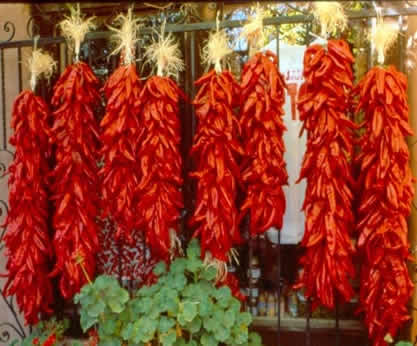
www.nps.gov/petr/historyculture/images/Ristras.jpg, http://seawifs.gsfc.nasa.gov/OCEAN_PLANET/IMAGES/I-70f.gif, www.ers.usda.gov/AmberWaves/February05/Findings/images/finding_cheese.jpg and
www.nlm.nih.gov/medlineplus/images/oliveoil.jpg.

Friday, August 22, 2008

A Three Months’ Supply of Everyday Foods

Provident Principles and Practices
© David Edwards, 2008
..+
..+
PRINCIPLE: The providentliving.org Web site reiterates counsel from recent prophets asking us to gather a small supply of foods that we normally eat on a daily basis. One possible approach to doing this is to buy some extra food items every week. We can build our collection little by little until we have a full three months' supply. We need to make sure that we keep rotating that supply, using up old items before using new ones. – See www.providentliving.org/content/list/0,11664,7445-1,00.html

PRACTICES: For over 150 years, Church leaders have asked us to store food as part of a program of living providently. Where possible, they currently suggest that we begin our program by building and maintaining a three-month supply of foods that we normally eat and routinely replenish.

Under appropriate storage conditions, conventional long-term storage foods, e.g., grains, legumes, powdered milk, sugar or honey, and salt, can be stored for decades. However, many of us currently do not know how to effectively prepare and use them. Using long-term storage foods may involve learning how to use grinders, rollers, sprouters, mixers, solar ovens or camp stoves and other tools; finding, developing and sharing recipes; experimenting with soaking and sprouting; trying out different cooking methods, etc. In the aftermath of a large-scale emergency or disaster, having a three-month supply of everyday foods will give us a window of time to learn how to use our long-term storage foods while still subsisting on familiar foods that we already know how to prepare.

Also, many people are not used to eating much grain or legumes. An attempt to suddenly switch from a normal diet to a diet rich in grains and legumes, intended primarily for basic survival, could be difficult physically for many people (e.g., digestion or food-sensitivity issues). It may take time to transition to long-term storage foods, and having a three-month supply of ordinary foods on hand may make a transition to a diet rich in grains and legumes much more comfortable.

Finally, a three-month supply of ordinary foods may help people get through a pandemic wave. The Church recently published eight fact sheets on preparing for pandemic influenza. During a pandemic, the Church recommends social distancing, e.g., staying at least six feet apart from others outside of family, and washing hands carefully, as viruses can be picked up from contaminated environmental surfaces. Of people who get influenza from H5N1 virus, about 60% die. Currently, H5N1 is not easily transmitted from person to person in a sustained manner. However, most experts believe that this virus, or some other virus, will ultimately mutate, allowing easy transmission, and causing illness worldwide. In an H5N1 pandemic, the fatality rate from the virus will likely decrease, but it may still be high. Many people will get sick or die; many will be quarantined. Experts say profound social disruption and food shortages are likely. If feasible, staying at home is advised. Having a three month supply of food may help your family survive. It is said that Dr. Robert G. Webster, a renowned H5N1-influenza expert, is prepared with a three-month supply of food and water at home.

Credits: Picture of cereal and label retrieved 22 Aug 2008 from http://www.ars.usda.gov/is/pr/2005/050512.ironcereal.gif; picture of cans is Microsoft clip art; drawing of someone not feeling well retrieved 22 Aug 2008 from http://digestive.niddk.nih.gov/ddiseases/pubs/hepb_ez/images/sick.gif; photo of people afflicted by a wave of the 1918 pandemic influenza retrieved 22 Aug 2008 from http://www.lanl.gov/science/1663/images/flu_hospital_lg.jpg.
.
To learn more about the relationship between pandemics and food, see www.pandemicflu.gov/plan/individual/index.html#social, http://providentliving.org/content/display/0,11666,8041-1-4414-1,00.html (Church Web pages), and http://abcnews.go.com/WNT/AvianFlu/story?id=1724801&page=1 (Interview with Dr. Webster).

Sunday, August 10, 2008

LDS Home Storage Center in Mesa, Arizona

Provident Principles and Practices
© David Edwards, 2008
..+
..+
PRINCIPLE: “Come, ye thankful people, come; Raise the song of harvest home. All is safely gathered in, ere the winter storms begin. God, our Maker, doth provide for our wants to be supplied.” – Hymn 94.

Full words and music to this hymn can be found at http://www.lds.org/churchmusic/detailmusicPlayer/index.html?searchlanguage=1&searchcollection=1&searchseqstart=94&searchsubseqstart=%20&searchseqend=94&searchsubseqend=ZZZ

PRACTICES: Thankfully, God, our Maker, does provide a way for us to obtain supplies to fulfill our wants and needs before the winter storms begin. We can safely gather harvested food and other edibles for our homes, either in bulk form (in commercial bags or boxes) or in dry-pack (canned) form, at an LDS Cannery or Home Storage Center (HSC). In Mesa, Arizona, the HSC is in the back part of the complex located at 235 S. El Dorado, off Broadway Road, near Loop 101.
.


At the HSC, you can gather and dry pack food as part of your three-month supply of foods that you routinely eat or as part of your long-term storage. Products are rotated on a three-month cycle.

In January, April, July, and October you can dry pack Dry Milk, Regular Oats, Macaroni, Carrots, Apples, and Pinto Beans.

In February, May, August, and November you can dry pack Potato Flakes, Fruit Drink Mix, Sugar, Black Beans, and Rice.

In March, June, September, and December you can dry pack White Beans, Refried Beans, Hot Cocoa Mix, Flour, Onions, and Red Wheat.

Members of the Queen Creek North Stake have an opportunity to order food and then go to the HSC and dry pack it at 1 p.m. on Stake Home Storage Day, the second Tuesday of every month.

To order, phone your ward cannery specialist five to six weeks before Stake Home Storage Day. Let this person know what you’ll need. This person will submit your order to the Stake, which will then submit it to the HSC, and the HSC will prepare the right amount of food.


Each family that orders must send at least one family member to the HSC on Stake Home Storage Day to can food, clean up, pay for the food (checks or money orders only), and take the food home. ...

.


If you can’t go on Home Storage Day, the HSC also sets aside the 1st and 3rd Fridays of each month so that members, by appointment, can go and dry pack products available that month. To make an appointment, call Brother and Sister Carter at the HSC at (480) 214-9114. You can also arrange to borrow one of their canning machines and/or buy cans, lids, boxes, plastic covers, etc.

Nonoriginal graphics retrieved 10 August 2008 from

www.fruitsandveggiesmatter.gov/month/images/beans_pinto.jpg
www.fruitsandveggiesmatter.gov/month/images/carrots.jpg
www.ars.usda.gov/is/graphics/photos/aug01/k9566-1i.jpg www.fruitsandveggiesmatter.gov/month/images/apple_3.jpg
www.nsf.gov/news/mmg/media/images/rice_watercolor_h23.jpg
www.nidcd.nih.gov/staticresources/health/inside/spr08/onions.jpg
http://wheat.pw.usda.gov/wEST/nsf/wheat.jpg www.ars.usda.gov/is/pr/2004/041223.bean.jpg
www.fec.gov/pages/brochures/check.gif.

The drawing of the rice is by Nicolle Rager Fuller, National Science Foundation.

To learn about food product costs, how much of a given product is found in a #10 can, or for how long you can store a given product, take a look at the home storage center order form, found at
http://providentliving.org/pfw/multimedia/files/pfw/pdf/113827_HSOrderForm_US_JUL_08_pdf.pdf

Thursday, August 7, 2008

Wheat and Other Grains: Long-Term Storage

Provident Principles and Practices
© David Edwards, 2008
..+
..+
PRINCIPLES: “The time will come that gold will hold no comparison in value to a bushel of wheat.” (Brigham Young, Journal of Discourses, volume 1, p. 250) .

“Lay up stores of corn, wheat, oats, peas, beans, buck wheat, and every thing else that can be preserved: for you will see a day when you will want it; and it will be when we shall feel the effects of famine, and when the United States have not any food.” (Heber C. Kimball, Journal of Discourses, volume 4, p. 330)

LDS leaders have not specified everything that each family should store for long-term storage. They have provided us with some guidelines. They suggest that we focus on foods that will allow us to stay alive if no other food is available. Among these foods are wheat and other grains (First Presidency Letter, June 24, 1988; Elder Keith B. McMullin, General Conference, April 2007).
...
PRACTICES: Grain is a nutritious long-term food storage item for most people. Wheat, in particular, stores well. At the cannery, you may can wheat in #10 cans once every three months on Stake Canning Day. Order one month ahead. For example, if you request it from the ward canning specialist before Aug 10th, 2008, you may can wheat on the Stake Canning Day at 1:00 p.m. on Sept 9th, 2008 at the LDS cannery in Mesa. You can also purchase good wheat at a reasonable price from some local stores. Usually, each adult needs 300-400 lbs of grain per year for long-term storage.

Uses for Wheat. Wheat can be ground for flour used in many dishes; cracked or rolled for hot cereal; sprouted for snacks, casseroles, etc.; or, grown as wheat grass, blended to make drinks.

Types of Wheat Desirable for Storage. Hard, red or white, winter wheat; high protein content (more than 13%); low-moisture content (less than 10%); triple cleaned; and free from weevils or other bugs.

Storage Containers. Sealed #10 cans with oxygen-removing packets kept in a cool place preserve wheat’s nutrition for up to 30 years and keep out pests. Mylar bags with oxygen-removing packets placed in closed HDPE buckets also preserve wheat well. Wheat stored in containers without oxygen-removing packets may sprout better in the long run but runs the risk of weevil infestation. .